
Last updated November 16, 2026
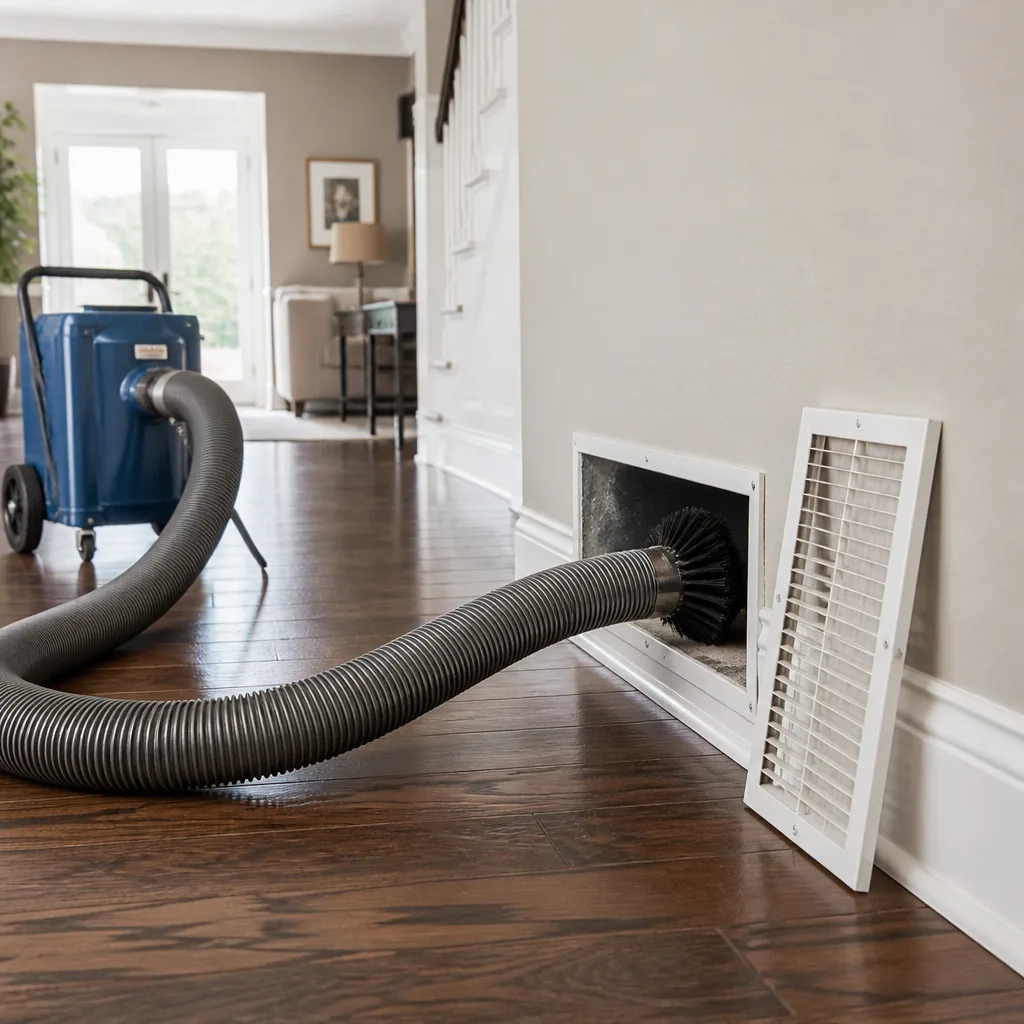 Whole-home duct cleaning
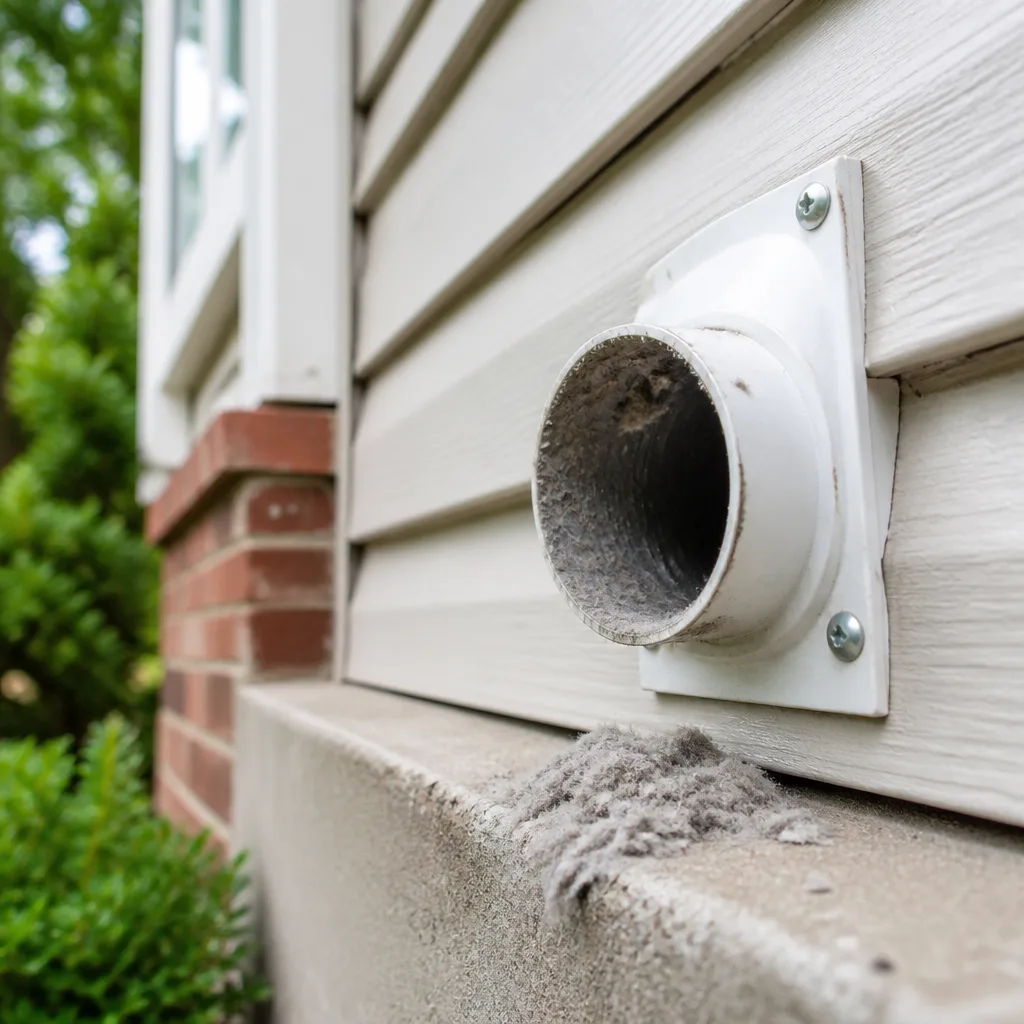 Dryer vent cleaning
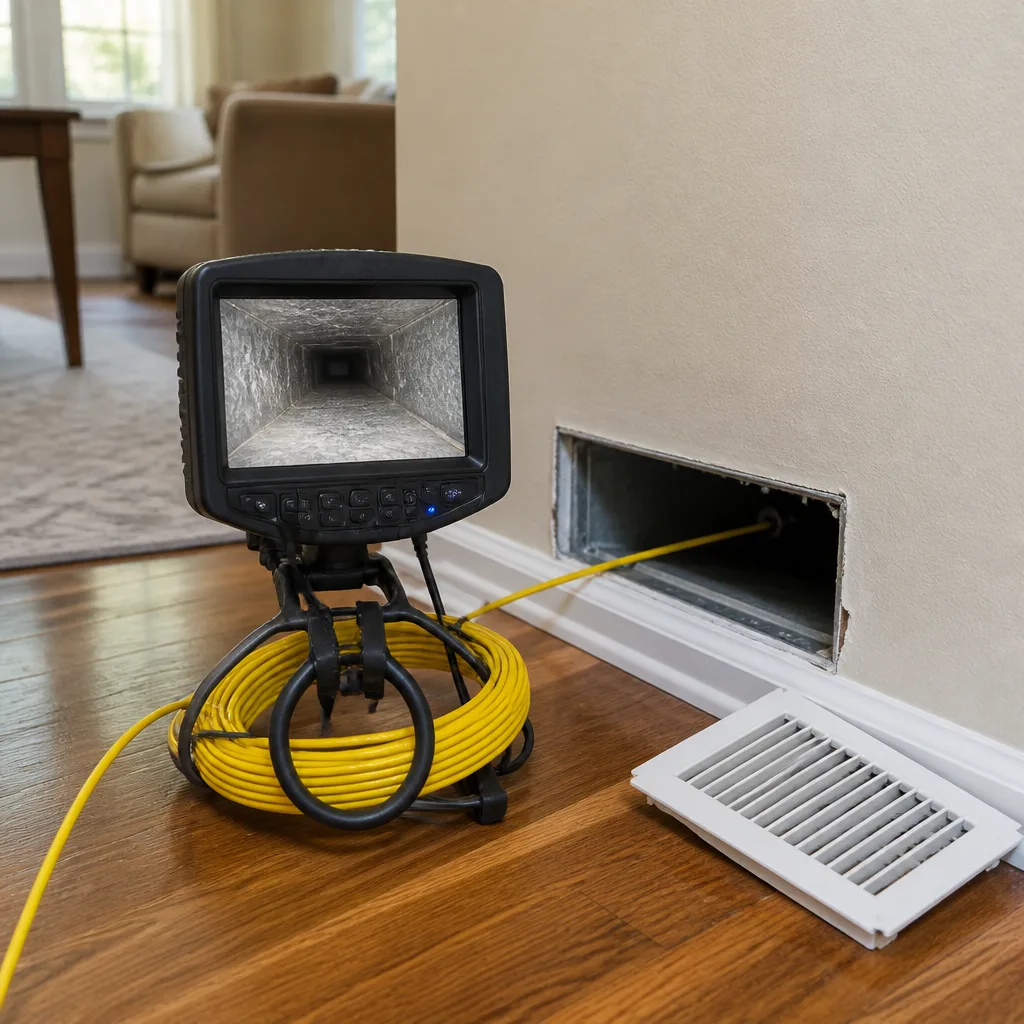 Camera inspection
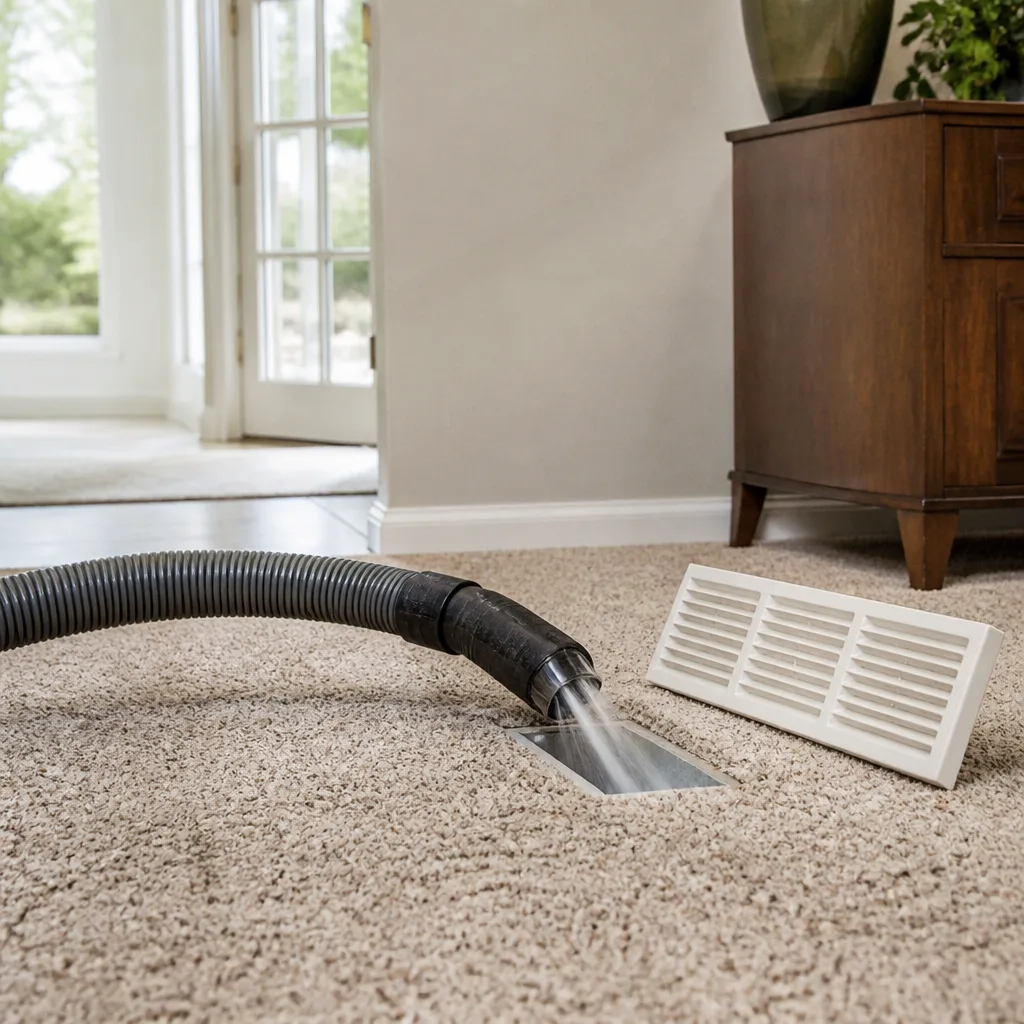 Sanitizing & deodorizing
Whole-system duct and dryer vent check with before-and-after photos - you see exactly what came out of your vents
That "$99 whole-house special" is a bait ad - the real number appears once they are in your hallway, or the "clean" is a shop-vac at the register. We photograph the inside of your ducts before and after instead.
DIY vs Professional Air Duct Cleaning: The Concord Homeowner’s Decision Guide
A shop vac and a $20 brush kit can clean the first foot behind your registers and hand you a bag of dust that makes the job feel finished. That bag is the problem. It’s the debris you could already see, and it says nothing about what’s bonded to the duct walls ten, twenty, or forty feet further in. The DIY vs professional air duct cleaning question in Concord isn’t really about effort or saving money. It’s about physics. Consumer equipment can’t generate the negative pressure or the mechanical agitation to break debris loose from duct surfaces and capture it. This guide covers what you can genuinely do yourself, what a real professional process looks like from first access point to final verification, and how to weigh the two for your own home in Concord.
Quick Answer
For most Concord homes, DIY air duct cleaning is limited to surface maintenance: cleaning register grilles, changing filters, and visually inspecting the dryer vent. It cannot remove debris bonded to duct interiors because household vacuums move roughly 100 to 150 cubic feet per minute (CFM) while professional HEPA extraction systems move 2,000 to 4,000 CFM. Professional cleaning is the only option when ducts are visibly contaminated, when a home is coming off a renovation or smoke event, or when a system has never been serviced.
Styles & brands we work with
- Whole-home duct cleaning
- Dryer vent cleaning
- Camera inspection
- Sanitizing & deodorizing
Table of Contents
- Why a Shop Vac Can’t Do What a Duct Cleaning System Does
- What Homeowners Can Legitimately Do Themselves
- The Damage Risk of Aggressive DIY Attempts
- Matching Your Situation to the Right Approach
- How to Evaluate YouTube Duct Cleaning Videos
- What a Full Professional Cleaning Actually Involves
- How to Evaluate a Duct Cleaning Quote in Concord
- Common Mistakes to Avoid
Why a Shop Vac Can’t Do What a Duct Cleaning System Does
The gap between household and professional equipment is measured in airflow. A typical residential vacuum, even a good shop vac, moves around 100 to 150 CFM. Professional duct cleaning systems built by Nikro or comparable manufacturers move 2,000 to 4,000 CFM through a HEPA-filtered extraction unit. That difference isn’t a nice-to-have. It determines whether debris ever leaves the duct.
Airflow alone doesn’t do the job either. Dust in a duct system isn’t loose like sand on a floor. It’s bonded to the metal or flex lining by moisture, static, and time, forming a compacted layer that behaves more like a coating than a pile. Getting it off requires two things at once: mechanical agitation that breaks the bond, and enough negative pressure to capture what breaks loose before it settles back where it came from. The professional approach pairs a contact-cleaning tool, such as the Rotobrush system, with HEPA extraction running in the same system at the same time. One removes, the other captures. A shop vac has neither the contact tool nor the CFM to do this.
There’s a second issue that matters in Concord specifically. Many homes here are older, and the ductwork may include sections of flex duct or short rigid runs tucked into tight spaces. Debris lodges in those transitions and elbows, well past the visible register. A consumer vacuum reaching ten feet into a run with a flexible hose loses most of its already-limited suction by the time the nozzle gets there. What the vacuum picks up is the easy dust at the mouth of the duct. What it leaves is exactly the material that never should have been there in the first place.
What Homeowners Can Legitimately Do Themselves
There’s real, useful DIY work in an HVAC system. It just isn’t inside the duct runs. Here’s what a homeowner can do without professional equipment and without risk of damage:
- Clean the register grilles. Remove each supply and return grille, wash it in the sink with mild soap, and dry it fully before reinstalling. Grilles collect a surprising amount of visible dust and clean up easily.
- Replace or clean filters on schedule. A clogged filter chokes airflow across the whole system and drives dust into places you don’t want it. If your home has a Honeywell or Aprilaire filter cabinet, check the filter at least every three months and more often during high-use seasons.
- Wipe the register boots. Take a damp cloth to the visible metal or plastic at the register opening. This is the part of the system a shop vac can genuinely address, and it’s worth doing.
- Do a visual dryer vent check. Look at the exterior vent flap and confirm it opens freely, and check for lint accumulation near the dryer connection. This is inspection, not cleaning. A dryer vent runs through walls and roofs where lint compacts into a fire hazard, and it’s worth treating it as the dryer vent cleaning professional service rather than a DIY task.
- Keep a written log. Note filter changes, service dates, and anything you notice about airflow, odors, or dust patterns. Documentation of what’s been done is one of the most useful things you can hand a technician.
Notice what’s not on that list: cleaning inside the duct runs. The work you can do complements professional service. It doesn’t replace it. Register cleaning and filter discipline keep the visible and easily-accessible parts of the system in good shape, and they make the system easier to evaluate when someone inspects it.
The Damage Risk of Aggressive DIY Attempts
The most common DIY mistake isn’t doing too little. It’s doing too much with the wrong tool. Ductwork is thin material, especially in the flex sections and in the joints between rigid runs. Consumer duct cleaning kits usually come with a stiff brush on a long flexible rod, and when someone runs that brush aggressively through a run, three things can go wrong.
- Perforating flex duct lining. Flex duct has a thin inner liner that can tear when a spinning brush head snags on a wrinkle or a poorly-installed transition. A torn liner lets air leak and creates a place for dust to collect.
- Dislodging joints and seams. Duct sections are joined and taped. A rod or brush pushed at the wrong angle can pop a joint loose or peel back sealant. That turns a maintenance task into an air duct repair job.
- Pushing debris deeper. Without enough negative pressure to capture dislodged material, a brush can drive debris further into the system, past the register you can reach, where it settles into remote branches or the main trunk.
Each of these is expensive relative to what it saves. A torn flex liner, a popped joint, or debris pushed deeper into the system requires repair before the system is back to normal. In Concord homes where ductwork is older or in hard-to-reach attic or crawl sections, a DIY mistake is also hard to detect. You won’t see the torn liner until you notice an airflow or dust problem weeks later.
Matching Your Situation to the Right Approach
The right answer depends heavily on what’s happened in your home. Some situations are well-served by DIY maintenance. Others make professional equipment non-negotiable. Here’s how to sort it:
Situations where DIY register-and-filter maintenance is sufficient
- A system that was professionally cleaned recently and is on schedule
- A low-use property, such as a vacation home or a second residence, where the system runs infrequently
- A household with no allergy or respiratory concerns and no visible dust or odor issues
- Newer construction where installers verified clean ductwork at handoff
Situations where professional equipment is non-negotiable
- Post-renovation. Drywall dust, sawdust, and construction debris settle into duct runs during renovation. That material is fine, abrasive, and gets pushed through the system by every HVAC cycle. Homeowners in Concord who’ve added an addition or remodeled a kitchen should treat duct cleaning as part of the project closeout.
- Post-smoke event. Smoke residue from a kitchen fire or a wildfire smoke event leaves odor and particulate in the duct system. If you’ve been in a home during a smoke event and the smell lingers after windows close, that’s the system, and it needs professional attention.
- Visible contamination. If you find dust or debris blowing out of a supply register when the system kicks on, or you see dark staining inside a register boot, the debris behind it is worse than what you’re seeing.
- Health concerns. Households managing allergies, asthma, or young children’s respiratory health should treat duct cleaning as a real intervention, not a cosmetic one.
- An old home’s first cleaning. If a Concord home has been in the same hands for a decade or more and the ducts have never been serviced, the accumulated debris needs professional removal.
How to Evaluate YouTube Duct Cleaning Videos
There’s a lot of duct cleaning content on YouTube, and almost all of it teaches the same thing: how to clean a register. Watch carefully and you’ll notice the pattern. The camera is almost always pointed at the register area or just past it. The tool is a shop vac with a length of hose. There’s no negative pressure containment anywhere in the shot, which means whatever dislodges is going back into the room. That is not a scaled-down version of a professional job. It’s a different job.
A real professional process looks different from the first access point. Here’s what to look for when you’re evaluating content, and what to look for when you’re evaluating a quote:
- Access ports. Professional service creates or uses access points in the duct to reach the full run, not just the register opening. Look for a technician opening, cutting, or removing an access panel in the trunkline.
- Negative pressure containment. A true professional job maintains negative pressure in the system while cleaning, so debris is captured rather than distributed. If you don’t see a HEPA extraction unit connected to the system, the job isn’t contained.
- Mechanical agitation. Contact cleaning requires a powered tool that reaches the walls of the duct, not just the airspace. A vacuum with a hose alone is extraction without agitation, and that only removes what’s already loose.
- Full-system coverage. Professional work touches the supply registers, the return grates, the main trunk, the plenum, and the air handler cabinet. If the content ends at a single register, so does the cleaning.
- Verification. Professional cleaning ends with before-and-after documentation, so you can see what changed. If a video shows no before-and-after photo of the duct interior, it’s showing you an inspection, not a cleaning.
The takeaway is simple. What most YouTube duct cleaning videos show is a maintenance task, not a duct cleaning. Worth doing at home as register upkeep. Not a substitute for the full job.
What a Full Professional Cleaning Actually Involves
A proper duct cleaning isn’t a blower pointing at the register. It’s a sequence of steps that must be done in order to actually remove what’s in the system. In our experience, this is what separates a professional job from a discount one:
- Inspection. Before anything runs, a technician inspects the system, notes the duct materials and layout, checks the air handler, and identifies any compromised sections. You can’t quote a cleaning accurately until you’ve seen what’s in the system.
- Access creation. The technician creates access ports at the main trunk and at key branch points, enough to reach the full system without relying on register openings alone.
- HEPA extraction and standard setup. A HEPA-rated extraction unit connects to the system and puts it under sustained negative pressure. This is the step that replaces the 100-150 CFM household limit with professional airflow in the thousands of CFM.
- Contact cleaning. Aggitation tools such as the Rotobrush system travel through the duct runs and loosen debris from the walls. Extraction and agitation run together so debris is captured as it breaks free.
- Component cleaning. Supply and return registers, grilles, the air handler cabinet, the blower compartment (where accessible), and the plenum get cleaned directly.
- Verification and photography. Before-and-after photos of the duct interior document what was removed. The system is resealed, tested, and reviewed with the homeowner.
If your home has a Honeywell or Aprilaire filtration system, a good technician also checks the filter cabinet and the media. Filtration and air quality work together, and neglect in one undermines work in the other. This is why the equipment roster matters. A cleaning company running Rotobrush and Nikro equipment, with Abatement Technologies gear in the stack, is set up for remediation-grade air quality work. A company running a blower and a shop vac isn’t.
How to Evaluate a Duct Cleaning Quote in Concord
Duct cleaning has a bad reputation for a reason. A low teaser price shows up on a mailer, and by the time the technician is in the home the price has multiplied. The way to protect yourself is to know what to ask before anyone touches your system:
- Ask what equipment will be used on site. If the answer is a shop vac and a blower, the quote isn’t for the job you need. Professional equipment should be identifiable by name.
- Ask whether the price is per-system or per-vent. A per-vent price structurally rewards the cleaner for doing less, and it’s the setup for a bait-and-switch. A whole-system, flat price agreed before work starts is the honest structure.
- Ask for before-and-after photos. A professional cleaner documents the duct interior before and after and shares it with you. This is the only way to verify that the work actually happened.
- Ask whether they carry insurance. A bonded and insured company is a baseline expectation, not a premium one.
- Ask what happens if they find damage. If the answer is “we’ll hand you off to a separate contractor,” that’s half a service. Air duct repair and cleaning belong with the same company, so you’re not coordinating two schedules.
For homeowners who want to see what a service should look like, the air duct cleaning page is a useful reference. For anyone new to the local market, there’s good background on the city itself in our Concord overview. And Benchmark Air Duct Cleaning is the standard we hold every job to. The name is deliberate. Built to a standard, not a price.
Common Mistakes to Avoid
Most of the regret in this category comes from predictable mistakes. Here are the ones we see most often:
- Assuming a bag of dust proves the ducts are clean. A shop vac full of dust means the first foot of duct is cleaner than it was. It says nothing about the 95% of the system the vacuum never reached.
- Running a stiff brush through flex duct. The liner is thin and easily torn. A single snagged brush head can cost more in repair than the cleaning you were trying to avoid.
- Buying the lowest quote without asking what’s included. In Concord, as anywhere, the lowest quote is often the smallest scope of work. Ask what equipment will be used and what gets cleaned, plainly.
- Ignoring the dryer vent. This is a fire-risk service, not an optional add-on. Lint compacts in the run and the outdoor flap, and a vent that hasn’t been cleaned in years is worth treating seriously.
- Cleaning ducts but not looking at filtration. If a Honeywell or Aprilaire filter is overloaded or mismatched, the duct system will redirty faster. Check filtration alongside cleaning.
- Skipping documentation. If nobody photographed the before and after, you have no way to know what was actually done. Insist on it, from yourself as a homeowner and from any cleaner you hire.
- Treating cleaning as equivalent to repair. Torn flex, disconnected joints, and crushed sections are repair jobs, not cleaning jobs. If a technician finds damage, cleaning continues to make sense only after the repair is scheduled.
See the difference
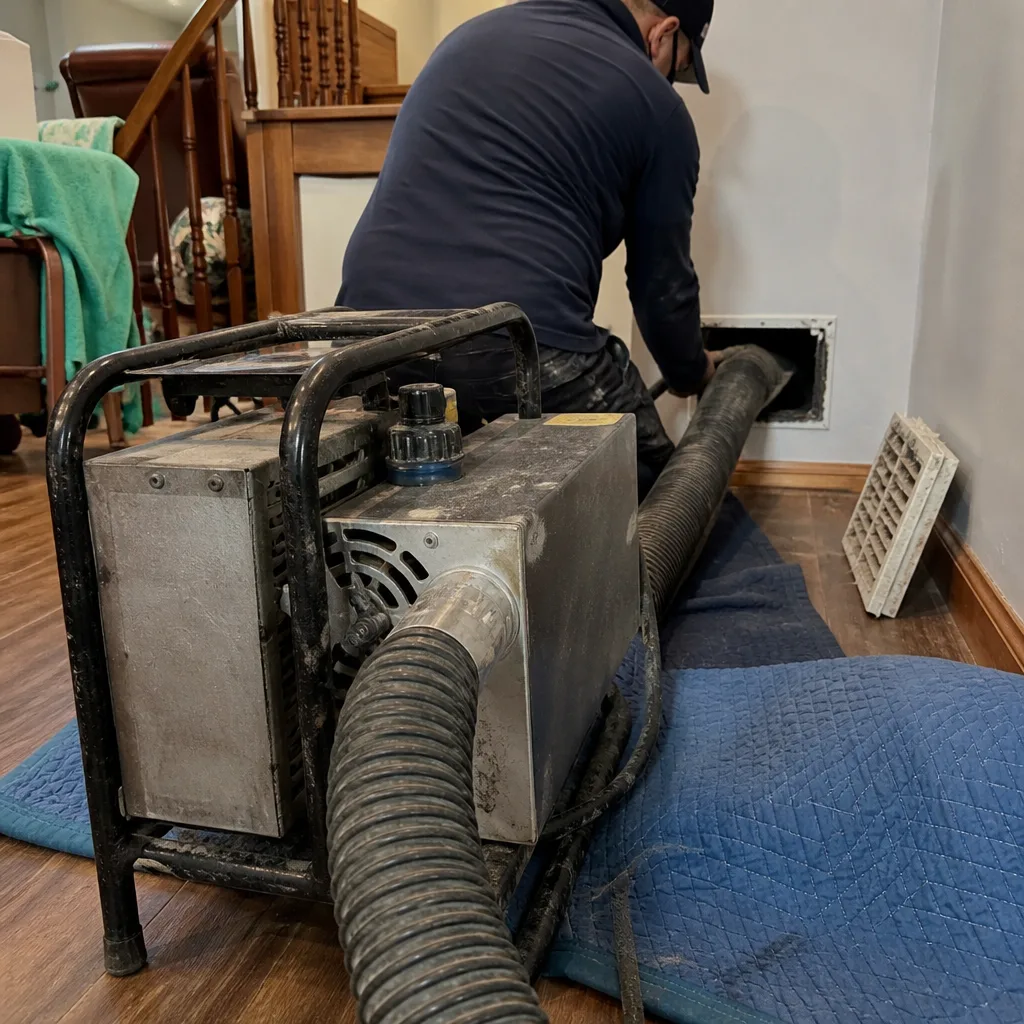 Before
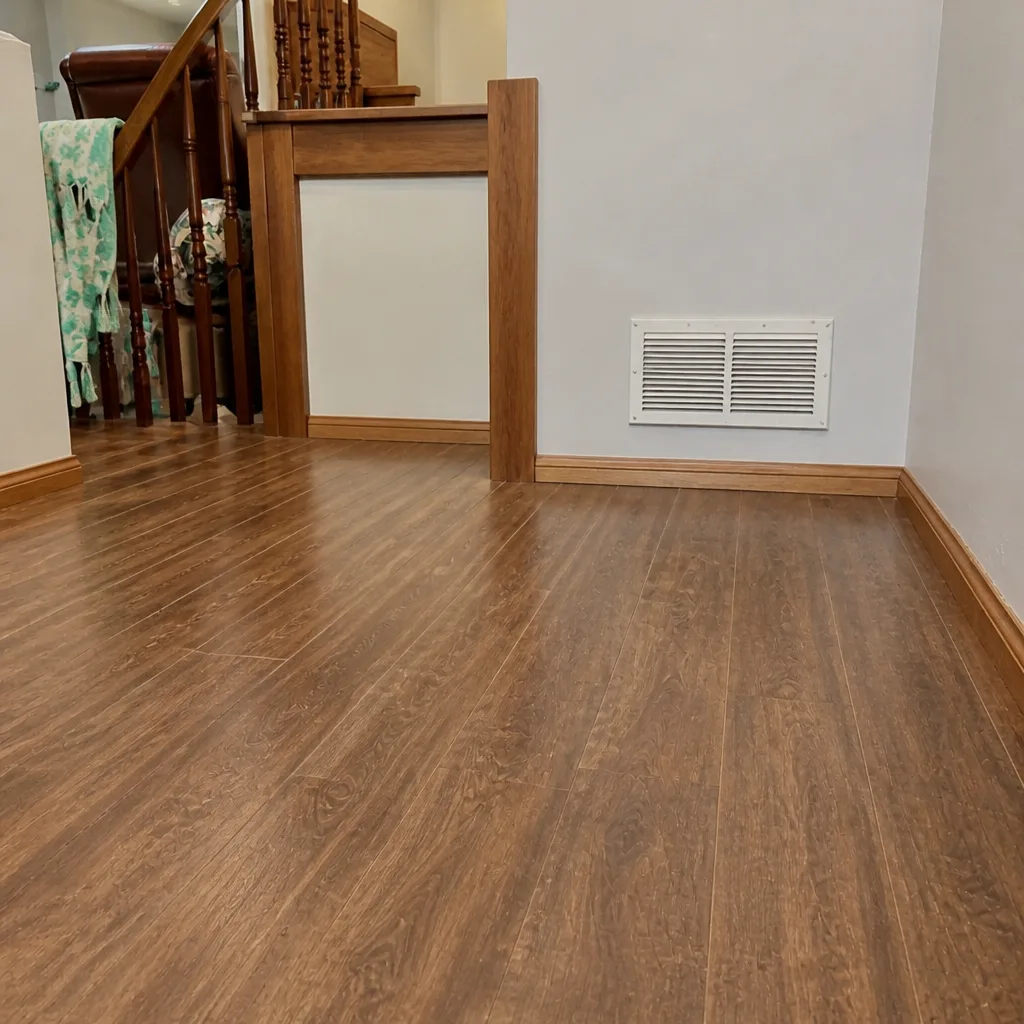 After
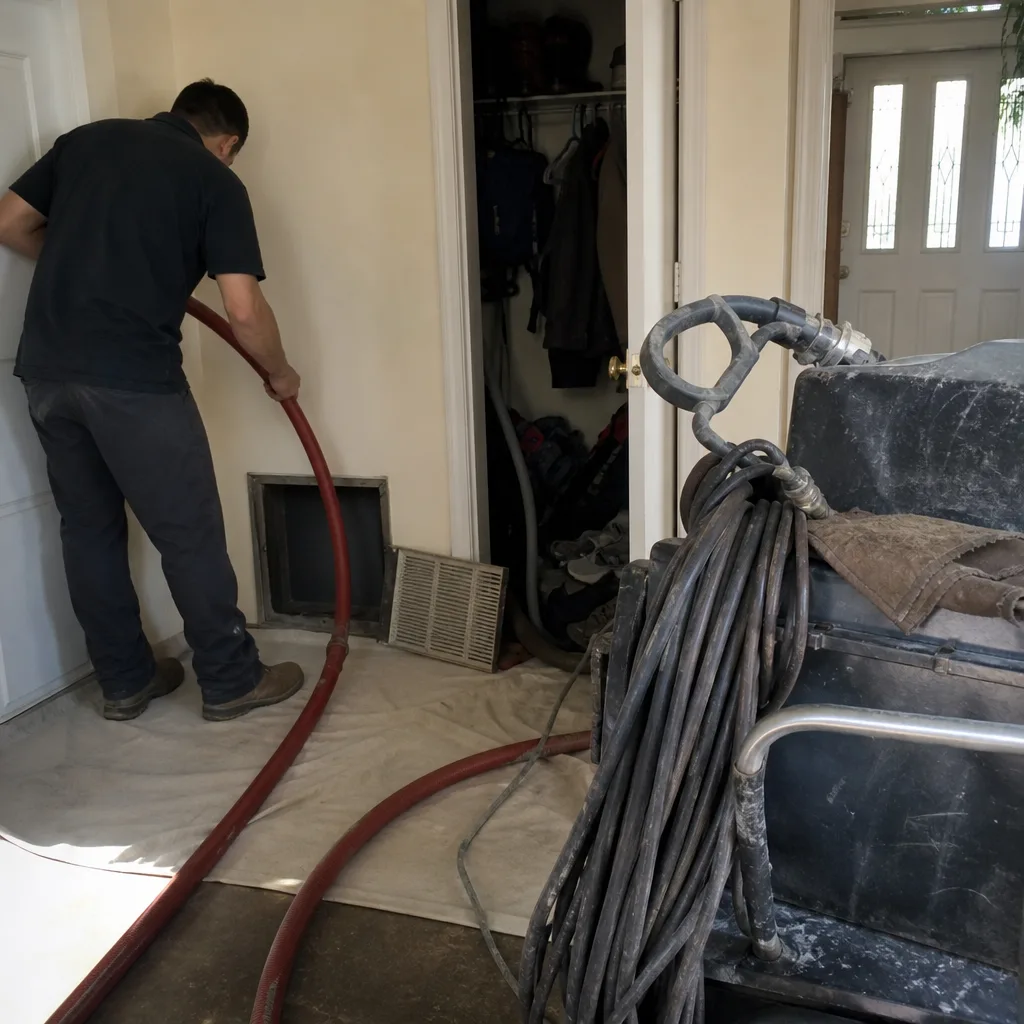 Before
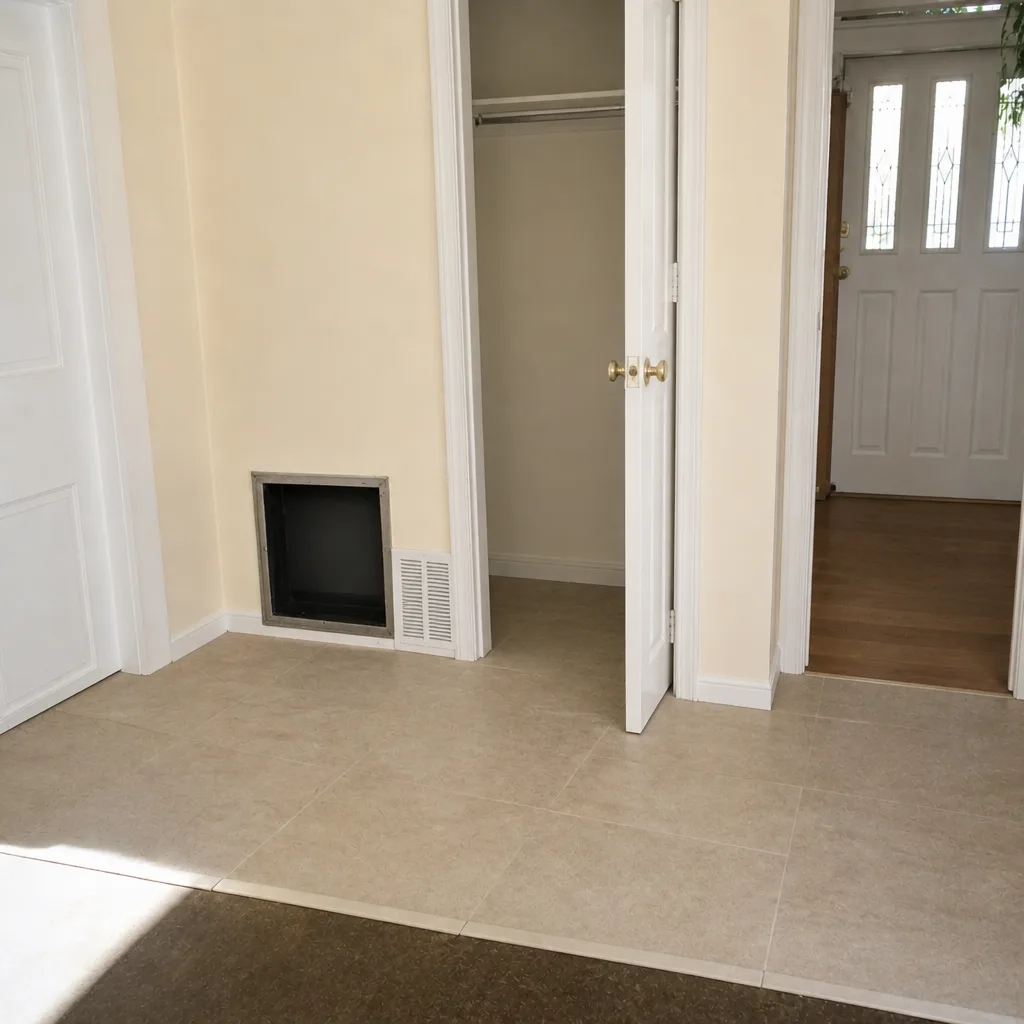 After
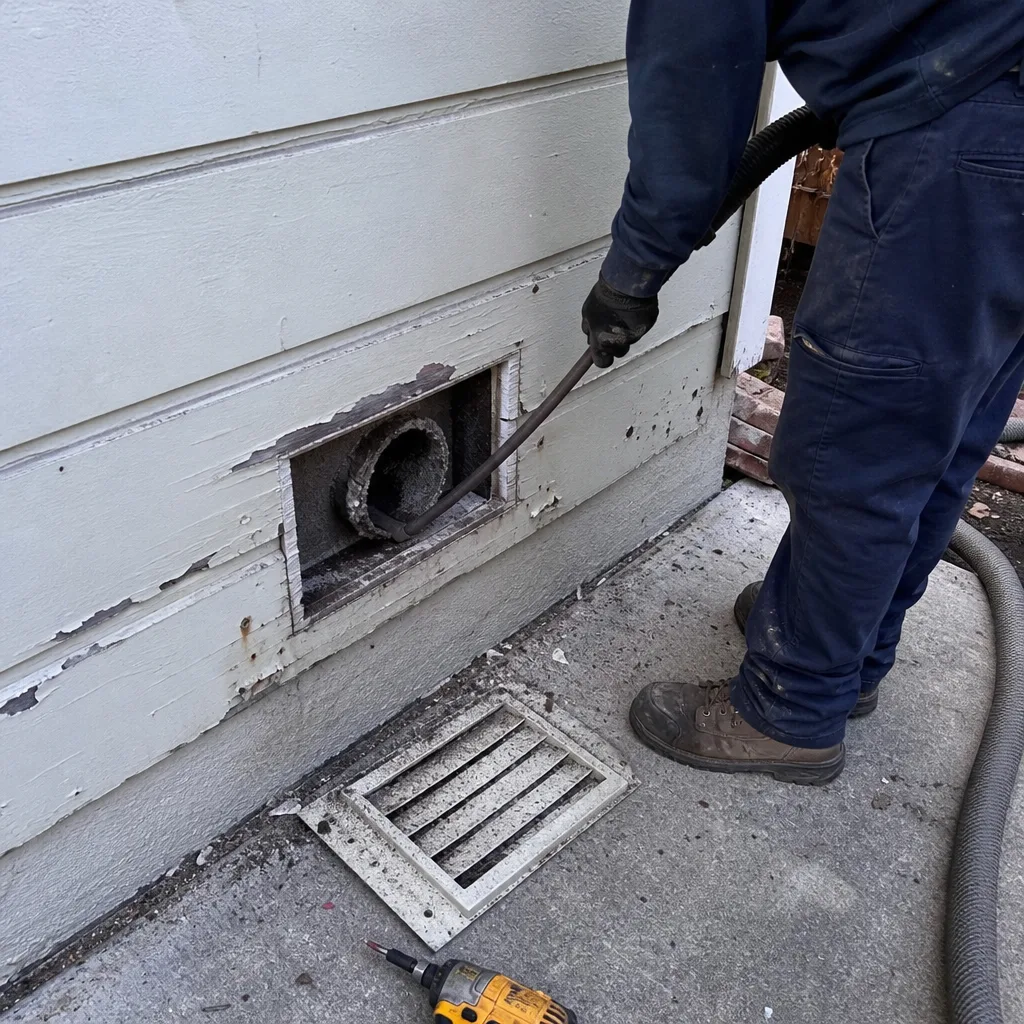 Before
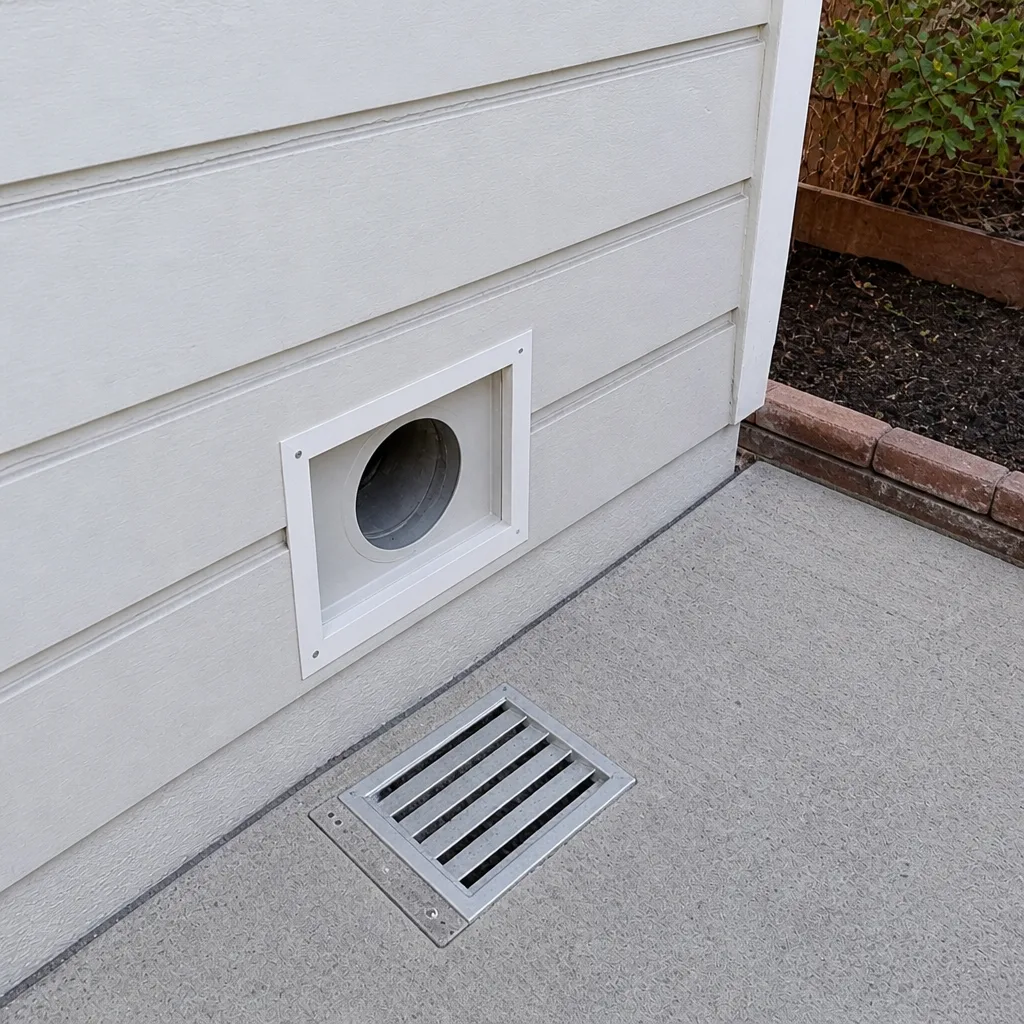 After
When to Call a Professional
Call a professional when the question isn’t cosmetic. That means: after a renovation that generated drywall dust or construction debris; after a smoke event that’s left odor or visible residue in the system; when a supply register is blowing dust into the room; when the ducts have never been serviced in a home that’s been lived in for years; or when a household member with allergies or respiratory sensitivity has noticed a change in symptoms. It also means calling when you’re not sure, because an inspection is free and it settles the question. The dryer vent cleaning service is worth a call on its own if the vent has gone years without service. Benchmark Air Duct Cleaning offers free estimates in Concord; call (855) 970-7954. We answer 24/7. Fast dispatch from 7am to 7pm, Sunday through Friday.
Frequently Asked Questions
It’s priced per system, not per vent, and the written estimate is what sets the final number. Whole-system cleaning is typically quoted as a flat figure after inspection. Avoid any cleaner offering a per-vent price or a teaser coupon, because that structure is the setup for a much larger invoice once the technician is on site. Call (855) 970-7954 for an exact quote. Estimates are free.
Yes, in three ways: a stiff brush on a flexible rod can perforate flex duct lining, it can dislodge taped joints and seams, and without enough negative pressure it can push debris deeper into the system. All three turn a cheap maintenance attempt into a repair job. A household vacuum should be kept to register cleaning and visible surfaces only.
For an average home with a clean system and a properly maintained filter, professional cleaning every few years is reasonable. Homes with pets, allergy-sufferers, recent renovation, or an older system with no service history may need it sooner. In our experience, filter discipline between cleanings matters more than a fixed calendar. Call (855) 970-7954 for a free inspection to see where your system actually stands.
Before-and-after photos of the duct interior, taken by the technician. That’s the only verification that means anything. A technician who inspects before quoting and photographs before and after is operating to a measurable standard. Anything short of that is unverifiable, so ask for it up front.
Usually because they’re not for the same scope. Cheaper quotes often mean a shop vac and a blower, register-area cleaning only, per-vent pricing designed to grow, or no documentation. The lowest quote is often the smallest job. Ask what equipment will be on site and what parts of the system get cleaned, and the gap usually explains itself.
For register cleaning, filter changes, and a visual dryer vent check, yes. For anything inside the duct runs past the register opening, no. The physics of household vacuums can’t move enough air or agitate enough surface to remove bonded debris. The DIY work that makes sense is the maintenance that keeps the system in shape between professional cleanings. Call (855) 970-7954 for a free estimate if you’re unsure which scenario you’re in.
The Bottom Line
DIY duct cleaning has a real but narrow role. Clean your registers, change your Honeywell or Aprilaire filter, keep a log, and look at your dryer vent regularly. Do those things and your system will be easier to maintain. What you can’t do with a shop vac is remove the compacted debris bonded to the duct walls behind the register. That job requires professional equipment moving thousands of CFM with contact agitation and HEPA capture, doing both at once. If your Concord home is coming off a renovation, a smoke event, or years without service, the answer is professional cleaning. If you’re not sure, call. An inspection is free and it settles it. One call for cleaning, repair, and filtration.
Call (855) 970-7954 for a free estimate. We answer 24/7. Fast dispatch from 7am to 7pm, Sunday through Friday.
Written by the team at Benchmark Air Duct Cleaning.