
Last updated November 16, 2026
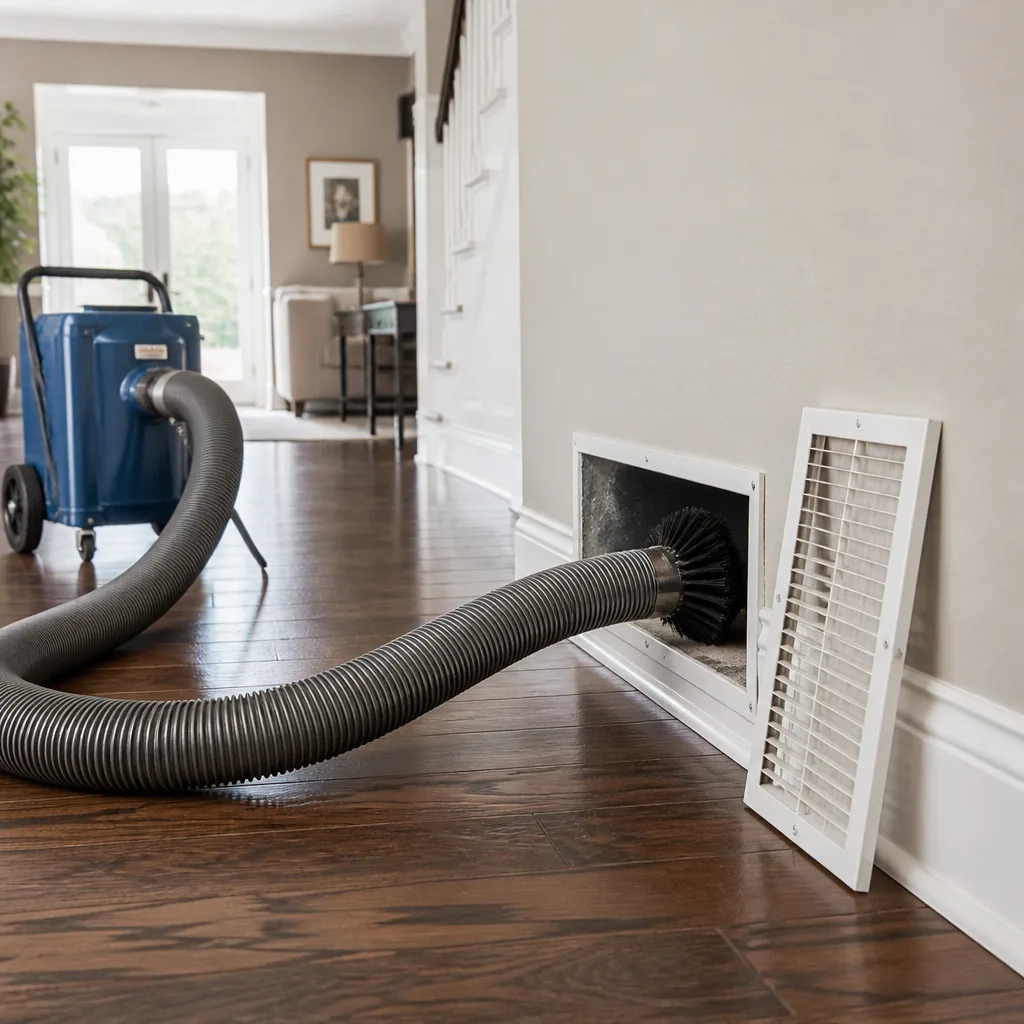 Whole-home duct cleaning
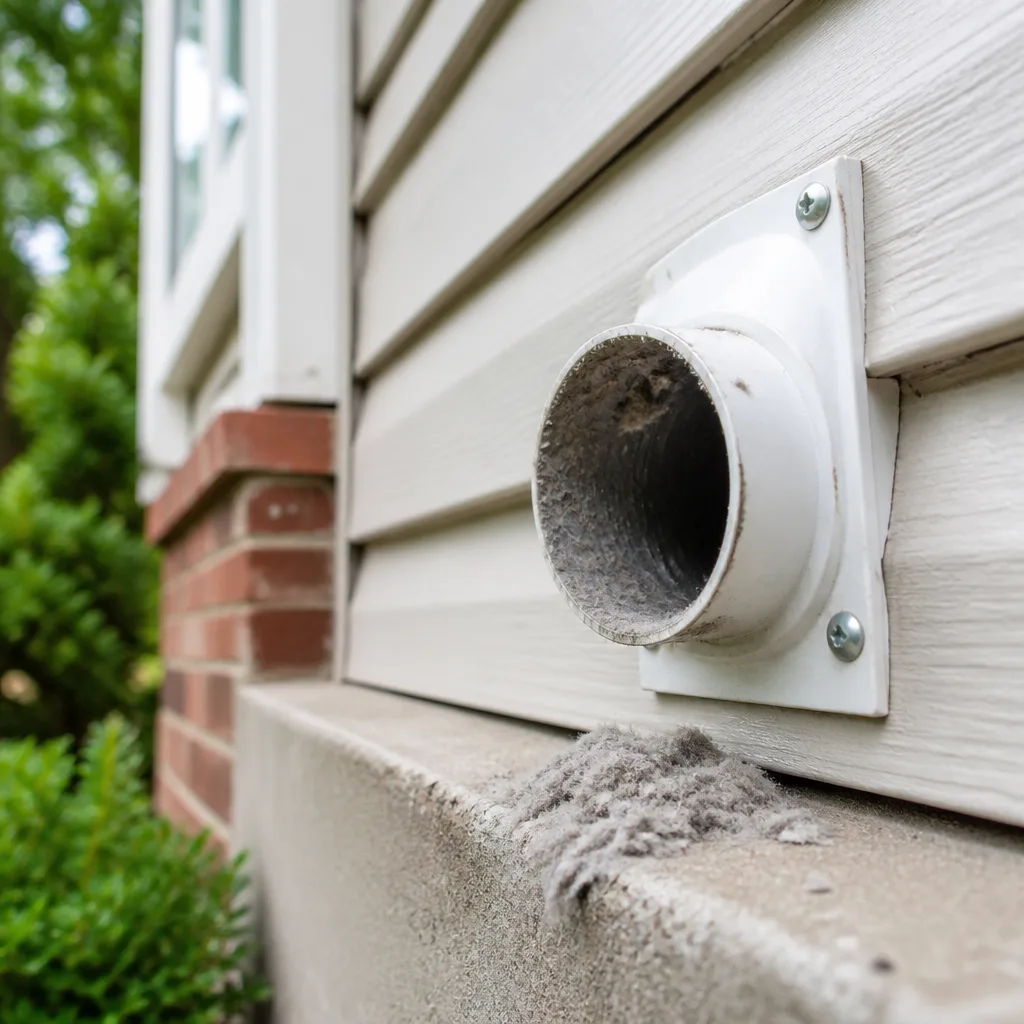 Dryer vent cleaning
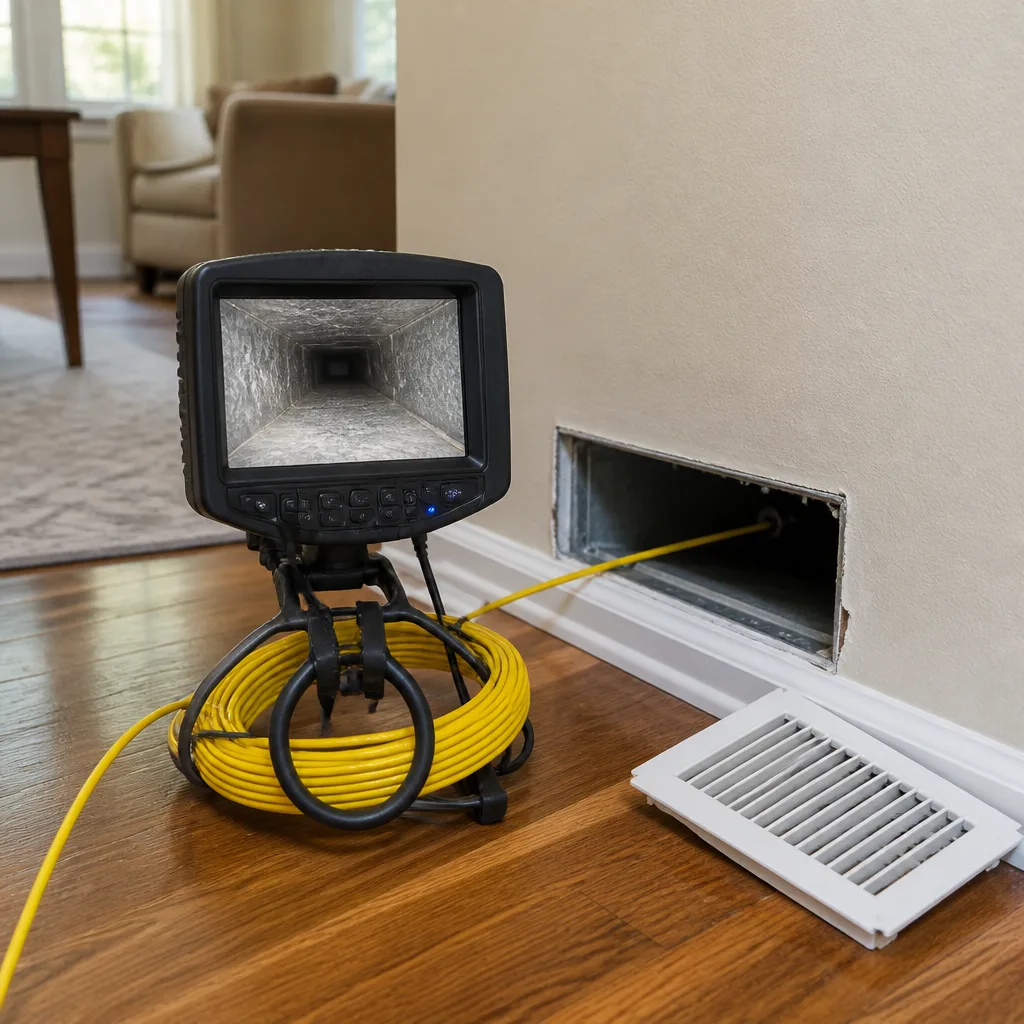 Camera inspection
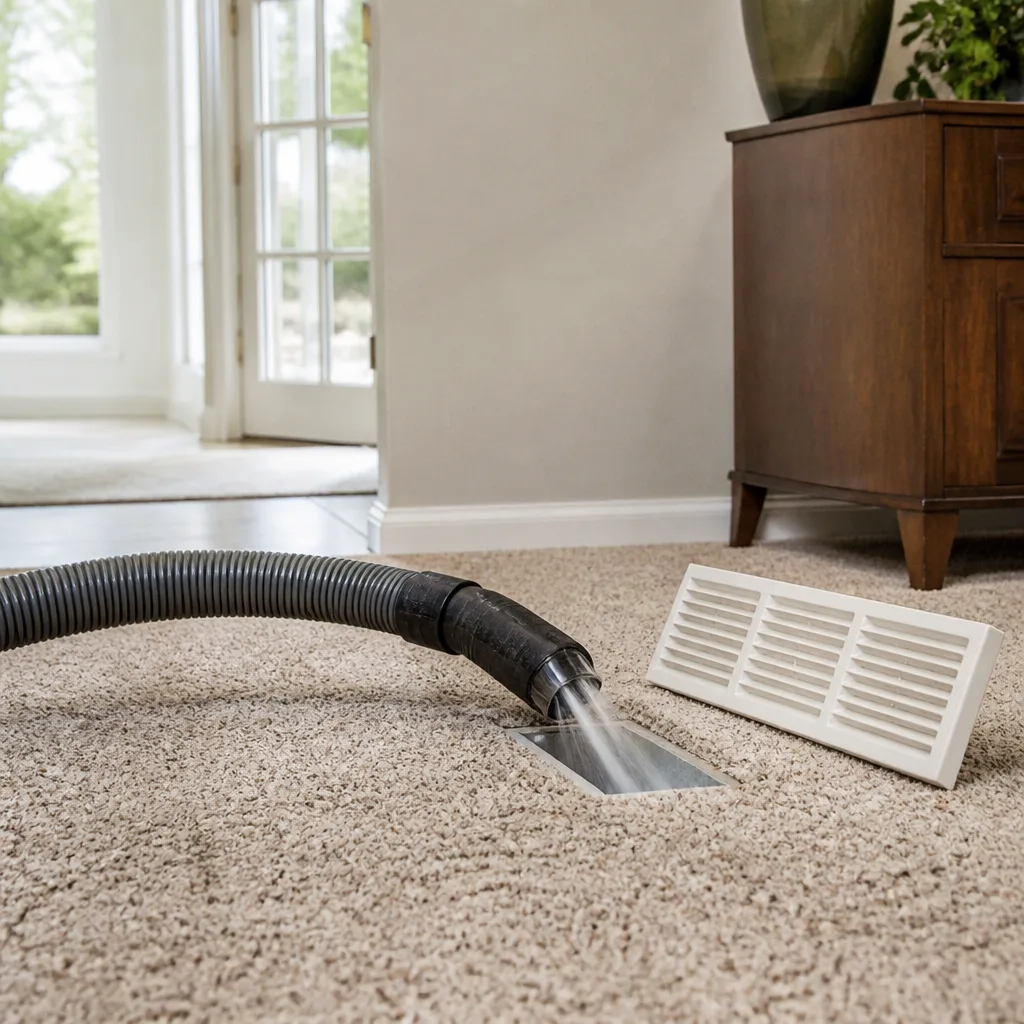 Sanitizing & deodorizing
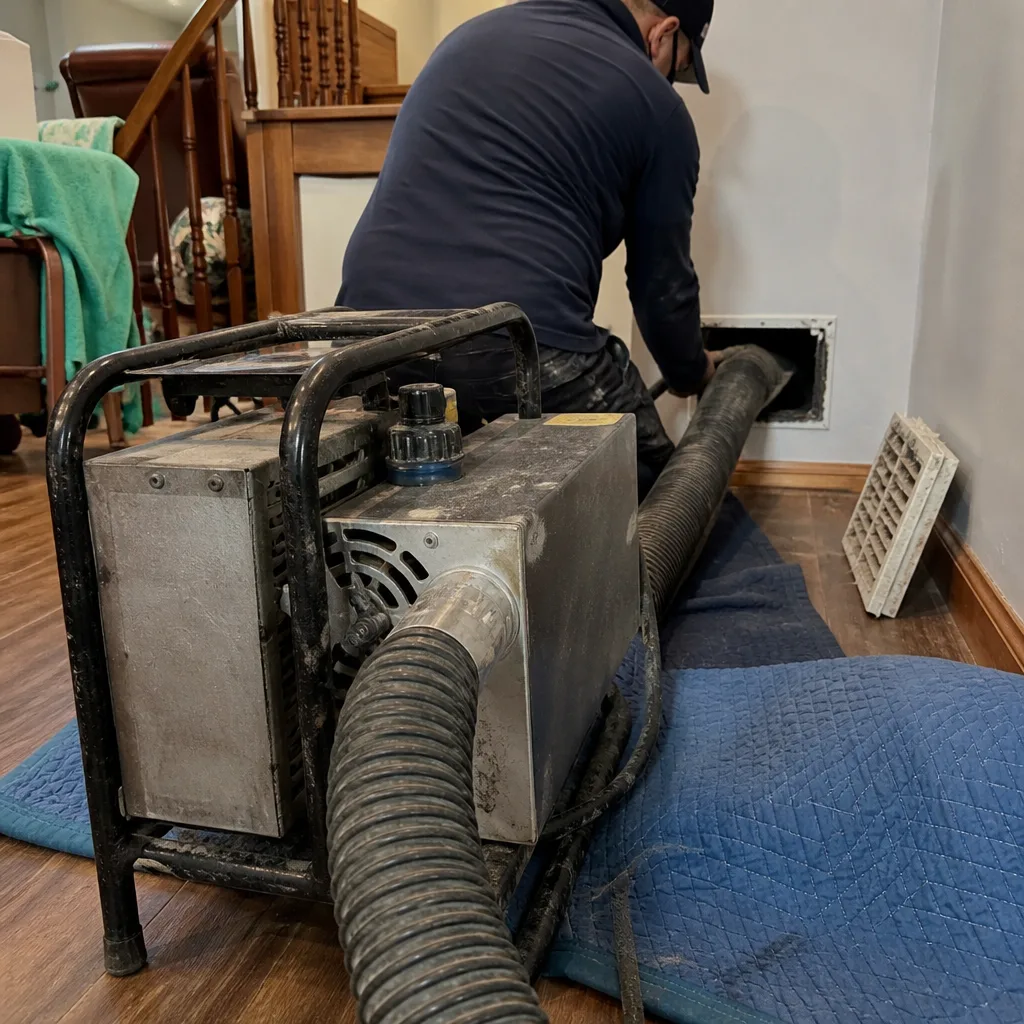
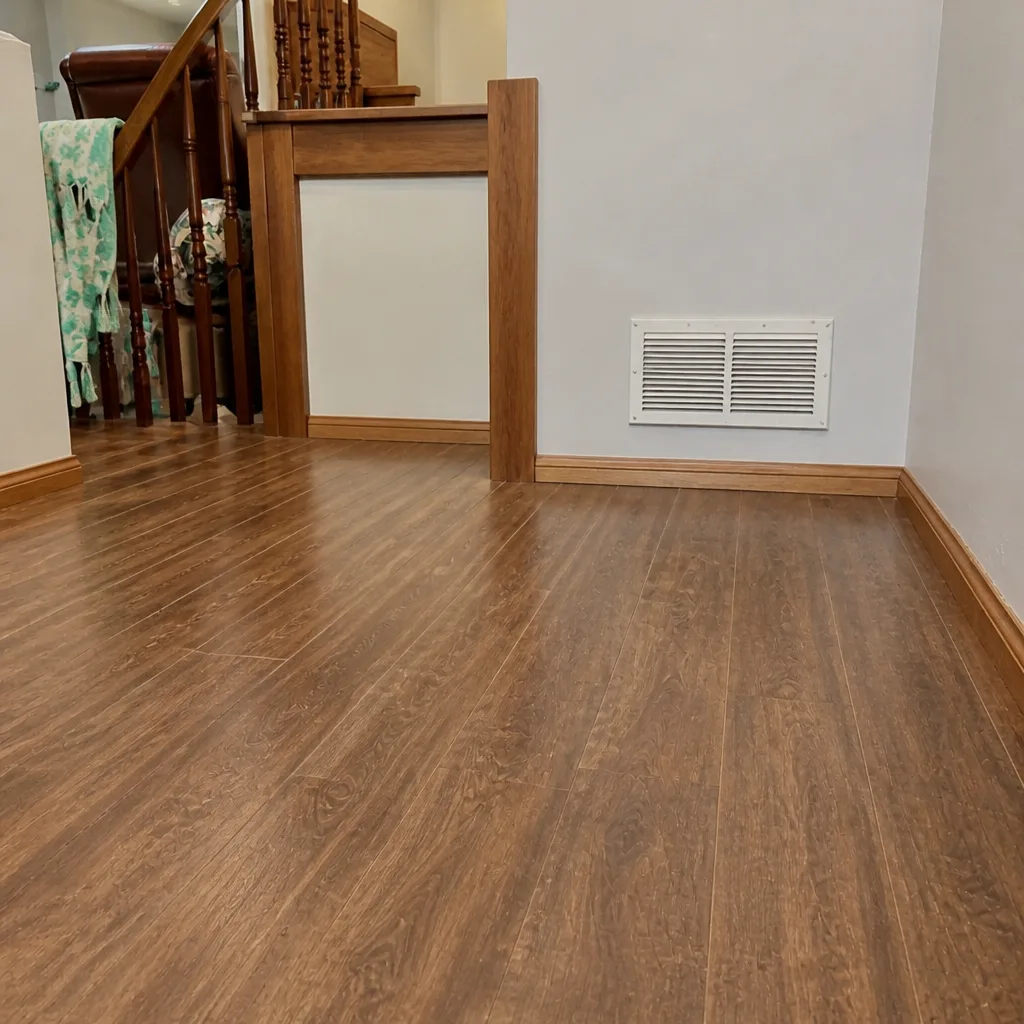
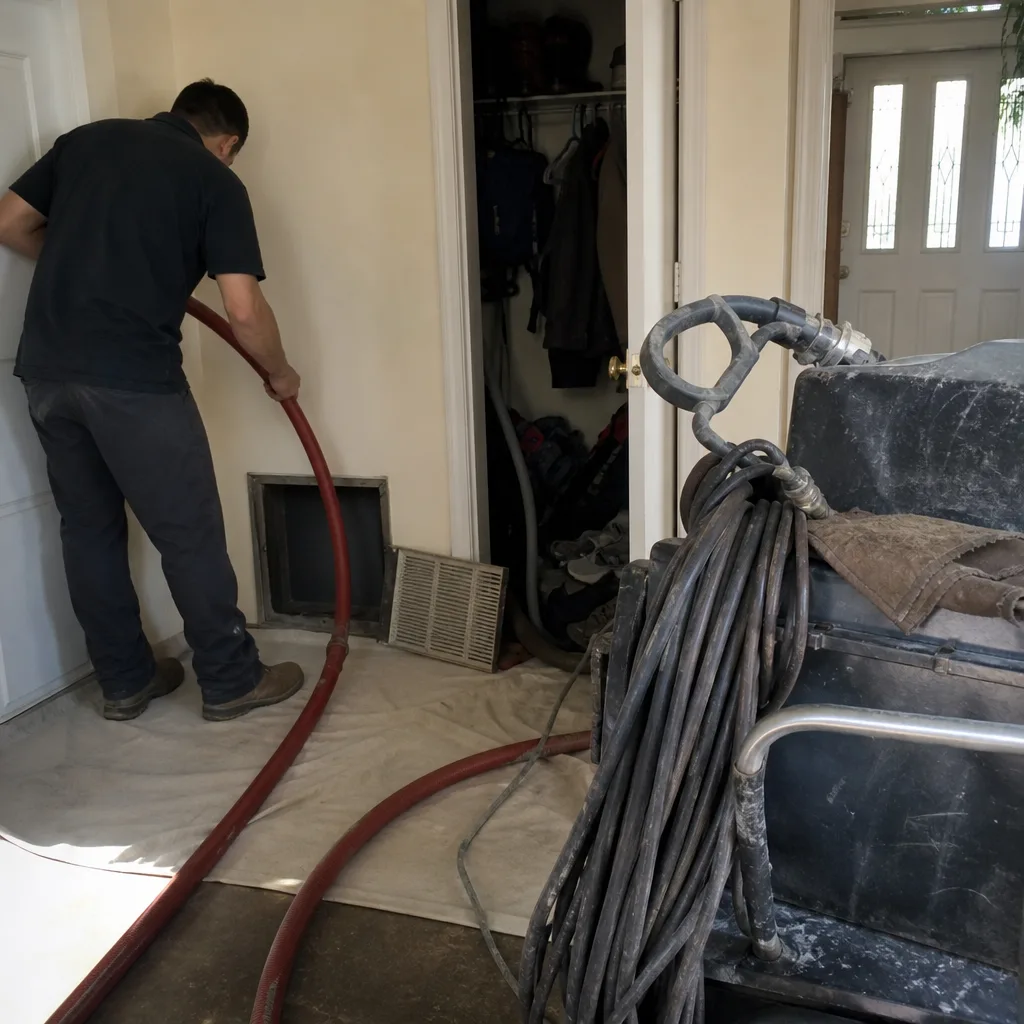
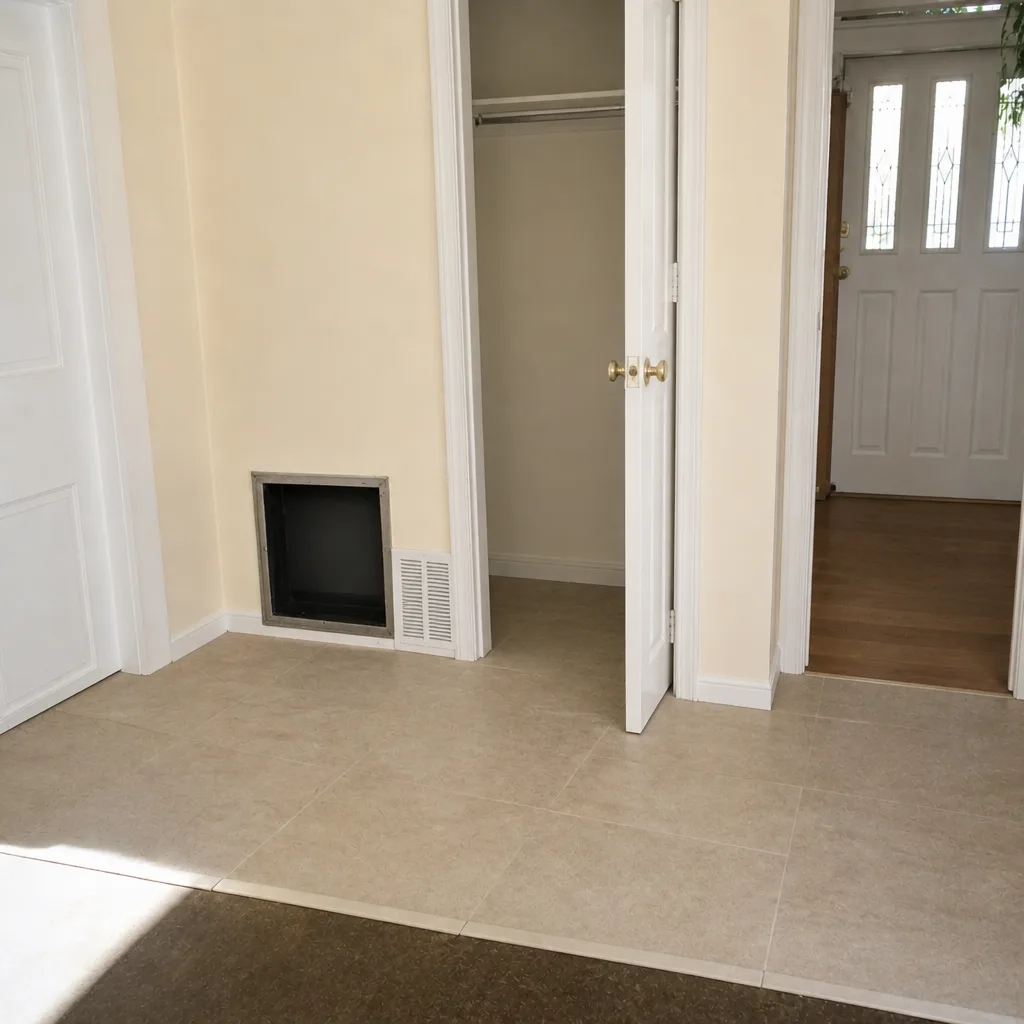
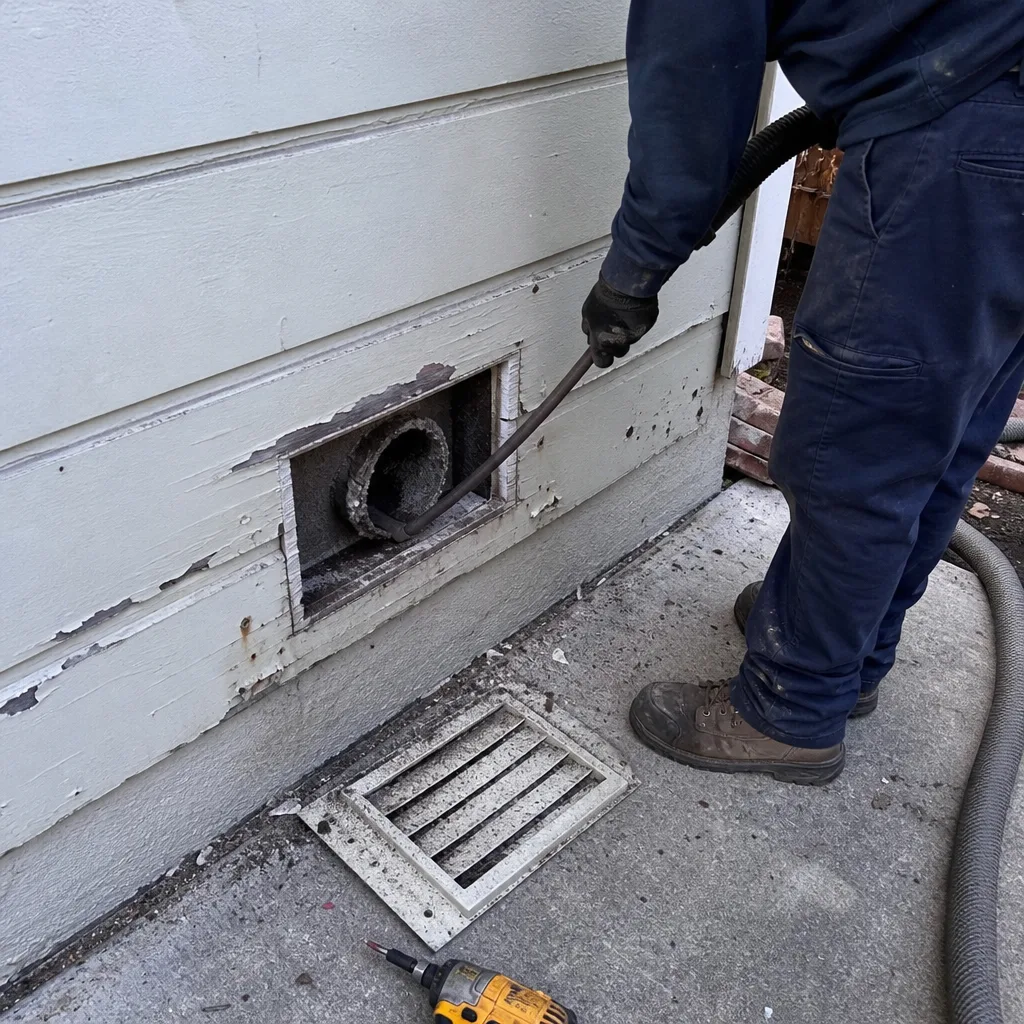
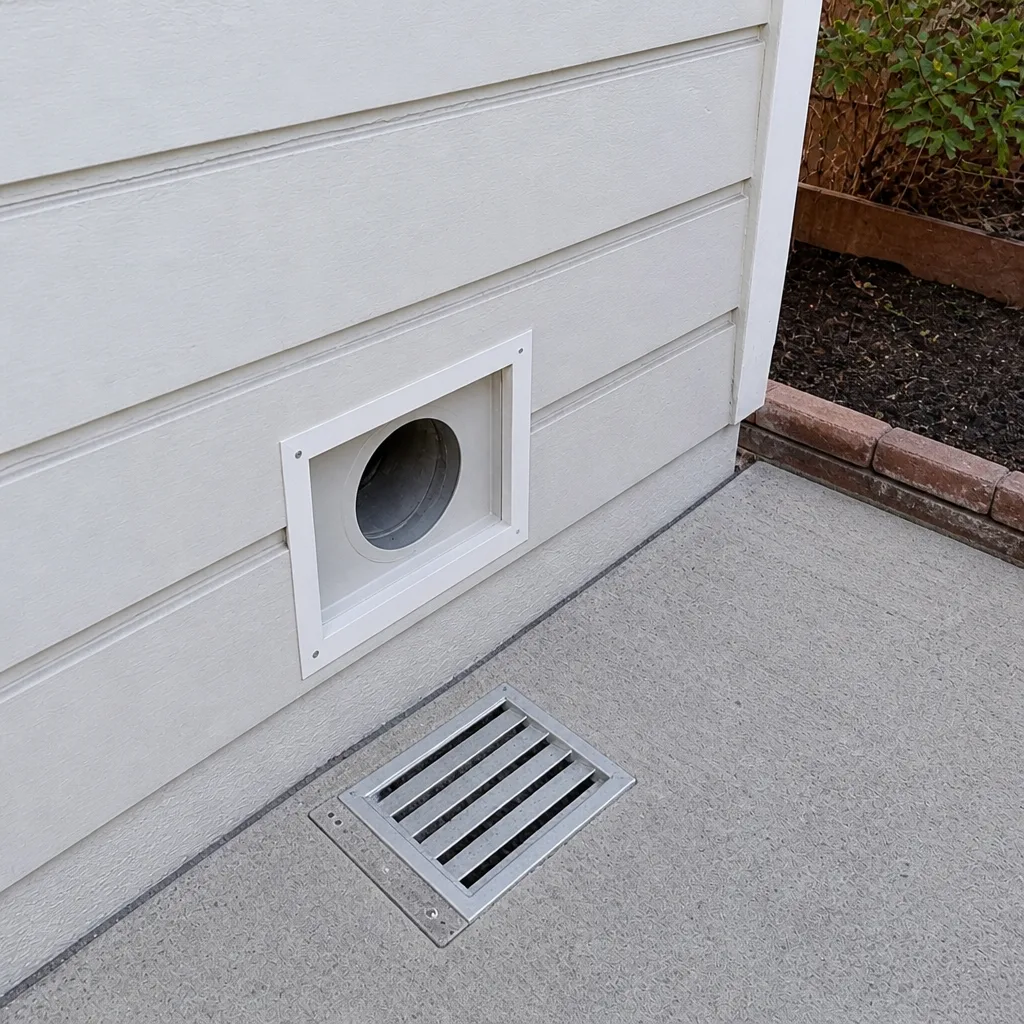
Whole-system duct and dryer vent check with before-and-after photos - you see exactly what came out of your vents
That "$99 whole-house special" is a bait ad - the real number appears once they are in your hallway, or the "clean" is a shop-vac at the register. We photograph the inside of your ducts before and after instead.
Air Duct Cleaning Emergency Preparedness Guide for Concord Homes
Most homeowners treat duct cleaning as a maintenance chore. That framing is why so many Concord households get caught flat-footed after a smoke event, a power outage, or a small roof leak. The ducts aren’t a static pipe system; they’re a reservoir. Whatever enters them – wildfire ash, construction dust, moisture-laden crawl space air – tends to stay there and re-enter your living space every time the furnace or AC kicks on. The question worth asking isn’t “should I clean my ducts,” it’s “do I have a plan for the three or four events that will almost certainly push contamination into them?” This guide gives you one. What follows is a working protocol for Concord homes, built around the specific hazards this area actually faces: wildfire smoke season, seismic activity, periodic power loss, and the water intrusion that follows a winter storm. You’ll get decision trees, inspection sequences, and a documentation template you can use the next time something happens.
Quick Answer
If your home ran its HVAC system during a wildfire smoke event that pushed outdoor AQI above 150 for more than a day, schedule a duct inspection within 4-6 weeks, not just a filter swap. After an earthquake of noticeable magnitude, do a visual check of every accessible flex duct joint before resuming normal system operation. And after any moisture event near HVAC components – roof leak, condensate overflow, crawl space flooding – inspect within 48 hours. A baseline duct inspection report created before fire season is the single most useful document you can have on hand afterward.
Styles & brands we work with
- Whole-home duct cleaning
- Dryer vent cleaning
- Camera inspection
- Sanitizing & deodorizing
Table of Contents
- Why Concord Homes Face Unique Duct Contamination Risks
- Wildfire Smoke: The Decision Tree for Scheduling an Inspection
- Post-Earthquake: The Flex Duct Joint Check
- Water Intrusion: The 48-Hour Inspection Sequence
- What to Document Immediately After Any Event
- Pre-Event Prep: The Baseline Inspection Report
- Common Mistakes to Avoid
- When to Call a Professional
Why Concord Homes Face Unique Duct Contamination Risks
Concord sits in a shallow inland valley, and the geography matters. The Diablo winds that funnel through the East Bay during fire season don’t just blow smoke over Concord; they settle it. Fine particulate matter gets pulled into return-air intakes at ground level, then circulates through a duct system that in most Concord homes is a mix of rigid galvanized trunk and flexible insulated branch runs. The flex sections are the problem. They have corrugated interior walls that trap fine ash the way a carpet traps sand, and once it’s lodged, no amount of blower operation clears it. It re-enters the living space through supply registers with every runtime hour.
Layer on two other realities. First, electrical reliability. When public safety power shutoffs roll through the East Bay hills, homes across Concord lose climate control for extended periods, then restart the system cold, drawing every bit of settled dust back into circulation at once. Second, seismic exposure. The Concord fault runs directly under the city, and even moderate shaking flexes duct joints that were never designed to move. A joint pulled loose by a moderate quake is a duct system that now dumps conditioned air into a crawl space or attic instead of the rooms it’s meant to serve.
None of these hazards are exotic. What separates households that handle them well is preparation. A homeowner who knows the decision thresholds in advance responds in days. The homeowner figuring it out from scratch after the smoke settles often responds in the wrong order – filter first, duct inspection never – and ends up with a system that still carries contamination six months later. What we do at Benchmark is built around the measurable version of this: professional-grade Rotobrush contact cleaning and Nikro HEPA extraction, not a shop vac and a blower, plus a before-and-after record you can actually look at. The rest of this guide is about the decision-making that should happen before any of that.
Wildfire Smoke: The Decision Tree for Scheduling an Inspection
The most common mistake after a smoke event is assuming a filter change is enough. A HEPA-style filter catches the ash moving through the return, but it does nothing about particulate that already settled inside the duct walls, and nothing about the fine ash that bypasses the filter at the cabinet seams. The threshold question is when to schedule an inspection, and it comes down to two variables: peak AQI level and duration of HVAC runtime during the event.
The Smoke Inspection Decision Tree
- AQI stayed below 100, HVAC ran normally: No duct inspection needed. Change your filter and note the event.
- AQI between 100 and 150 for two or more days, HVAC running: Change filter. Schedule a duct inspection within 60 days if you have allergy or asthma occupants in the home.
- AQI above 150 for more than 24 hours with the system running: Change filter immediately. Schedule a duct inspection within 4-6 weeks. Do not wait for a visible dust issue.
- AQI above 200 for any duration, or visible ash fall: Change filter, then schedule duct inspection. Treat the flex branch runs as the priority inspection area.
- System ran with windows open during a smoke event: Treat as the highest tier. Run the inspection first, then clean.
One nuance that’s easy to miss: the run-hours matter more than the wall-clock duration of the event. A house whose HVAC cycled continuously for 20 hours during a bad smoke day accumulated more internal loading than a house that stayed off most of the time and ran the system for four hours. If your system has a smart thermostat that logs runtime, pull the data before you decide. That log is also useful documentation if you’re making a claim later.
If you need professional air duct cleaning after a smoke event in Concord, the inspection step should come first. A technician who quotes the job before looking inside the ducts is quoting from a gut feeling. We inspect before we quote – that’s the whole point of the Benchmark name – and that inspection tells you whether you need cleaning at all, or whether a filter change and a startup purge would be enough. Estimates are free, and the written scope sets the final price.
Post-Earthquake: The Flex Duct Joint Check
Earthquake duct damage is different from what most homeowners picture. Rigid sheet metal ducts rarely fail visibly; they might crease or rattle, but they usually stay attached. The vulnerable points are flex duct joints – the corrugated branch connections at the plenum, at wye fittings, and at the takeoffs feeding individual rooms. Those joints are held with bands, tape, or mastic, and they are exactly the parts that move, abrade, or pull apart under even a few seconds of shaking.
The Pre-Restart Check
Before you run the system normally after any earthquake you felt clearly, do a visual inspection of every accessible duct joint. If you have a packed-away crawl space or a tight attic this may not be safe to do yourself; a professional check is a reasonable call. Where access is safe and clear, the sequence is:
- Turn off the HVAC system at the thermostat and breaker.
- Check the air handler cabinet. Look for gaps at the plenum, loose access panels, and any visible tearing.
- At each accessible flex connection, run your hand lightly along the joint. You’re looking for detached tape, popped bands, sagging runs, or anything that moves freely at the connection point.
- Note any visible duct runs that are kinked, crushed, or pulled away from their hangers.
- Snap a photo of each questionable joint before touching anything. This is documentation for both a technician and an insurer.
- If any joint is fully detached, leave the system off and get a technician out. A detached return pulls attic or crawl space air into the living space, and that air is not clean.
Air duct repair is a real category, not a euphemism for cleaning. Loose joints, separated plenums, and crushed branch runs get fixed, sealed, and pressure-checked as part of the same visit. Benchmark handles cleaning, repair, and filtration together, which matters when the fix requires more than one of those things (it usually does). Homes in Concord’s older neighborhoods, particularly the ranch-style stock built through the 1960s and 70s, often have original flex runs that were already due for attention. Seismic shaking tends to surface the weakest joints first.
One more seismic note: the earthquake doesn’t need to be big to matter for ducts. A magnitude that cracks no windows and knocks no pictures off the wall can still pull a marginal flex joint free at the plenum. If you felt it, check. That’s the entire rule.
Water Intrusion: The 48-Hour Inspection Sequence
Moisture is a different problem than smoke or seismic, and it’s the one that produces the worst outcomes when ignored. Water in or near the HVAC system doesn’t just dampen the ducts; it establishes the conditions for biological growth inside an insulated flex run, and once that starts, cleaning is only part of the solution. The inspection timeline matters: 48 hours is the outside window before conditions inside a wet duct assembly begin to deteriorate quickly.
Sources of Intrusion Worth Checking
- Roof leak: Water tracking down a joist bay into the attic duct run, often without visible ceiling staining directly above the ducts.
- Condensate overflow: The condensate pan or drain line fails, water pools at the air handler, and wicking carries it into the plenum and the first branch runs.
- Crawl space flooding: Rising groundwater or a failed sump brings humidity into the return plenum, and the flex duct runs that pass through that space become the moisture pathway.
- Window and door intrusion during a storm: Less common as a duct problem, but worth noting if water reached any floor register.
The Inspection Sequence
- Shut the system off. Don’t run HVAC through a wet duct assembly; moisture and dust combine into a biofilm, and airflow accelerates the spread.
- Identify the water source and stop it. Roof patch, pan replacement, drain clearing, sump repair – this step happens before any duct work.
- Call for a duct inspection. Within 48 hours if the moisture reached the ducts directly. A visual and moisture-meter check at the air handler, plenum, and every accessible duct run is the starting point.
- Assess for biological growth. Insulated flex duct that stayed wet holds moisture in the insulation jacket, and that’s where growth tends to appear. Cleaning is not a substitute for replacement where the insulation is compromised.
- Document everything. Photos of every affected joint, the moisture reading locations, and the source of intrusion (patched roof, replaced pan) all belong in one folder.
- Re-run and re-check. After repair and cleaning, a runtime check confirms that supply and return are balanced and no moisture lingers.
If you have Aprilaire or Honeywell filtration and IAQ equipment in the system, a moisture event raises a question about the inline filter housing and any humidifier or dehumidifier components as well. Condensate pans, drain lines, and inline filter housings are all on the inspection list after a moisture event.
What to Document Immediately After Any Event
The 20 minutes after a smoke event, quake, or leak is the most useful 20 minutes you’ll spend on the whole problem. Good documentation speeds up the technician’s diagnosis and shortens the insurance claim process, and bad or missing documentation is the most common reason homeowners end up paying out of pocket for damage that was actually covered. What to capture:
- System runtime log. Pull it from your smart thermostat app or write down the approximate hours the system ran during the event. Screenshot the runtime chart if you have one.
- AQI readings. Screenshot the local AQI history for the event window. AirNow or IQAir both keep historical data.
- Odor observations. Any noticeable smell – smoke, musty, or chemical – noted with a timestamp and the room where you noticed it.
- Airflow changes. Is any room significantly weaker than before? Is the system louder? Note the room and the specific change.
- Filter condition. Photo of the filter before you change it. If it’s loaded, that photo is evidence of the event’s effect.
- Visible contamination. Photos of any register showing dust, ash, or discoloration.
- Intrusion source documentation. For a water event: photos of the roof patch, the failed pan, the flooded section of crawl space, and the water line.
Keep it all in one folder on your phone or a cloud drive. Label files by date and event. “2025-08-14 smoke event” is better than “IMG_4471.” If you’re working with your insurer, they will want to see the before-and-after story, and the most persuasive version of that story is a documented timeline plus a cleaning report with before-and-after photos of the ducts themselves. That’s a standard part of what a professional cleaning includes; it’s what makes the work inspectable.
One more thing worth capturing: the state of the filters before you touch anything. If your HVAC cabinet uses Abatement Technologies or similar filtration equipment and the media got loaded during the event, that photo is the clearest single piece of evidence you’ll have that the event pushed particulate into the system.
Pre-Event Prep: The Baseline Inspection Report
The single most useful document a Concord homeowner can have on hand for the next event is a baseline duct inspection report created before fire season or storm season starts. It’s not glamorous. It’s a short report with photos, a written description of your duct system’s configuration, and the condition of each accessible joint, seal, and filter assembly at the time of inspection. Its value becomes obvious the moment something happens.
What a Baseline Report Should Contain
- A written system map. Duct type, approximate length, brand of air handler, filter brand and model, any inline IAQ equipment (Aprilaire, Honeywell, Abatement Technologies media, and Guardsman components all belong on the list if present).
- Photos of every accessible joint and connection. Date-stamped if possible. These are the reference images you’ll compare against after the next event.
- Moisture readings. Baseline moisture levels at the air handler, plenum, and accessible duct runs. Dry is dry; when a future reading is higher, you’ll know immediately.
- Runtime notes. Typical daily runtime at your normal thermostat setting. The point is to be able to say “our system normally runs 6 hours a day in summer,” and then compare.
- Filter replacement log. Date, brand, model, and a photo of the new filter installed.
The report pays for itself in two ways. First, when the next event happens, the technician can immediately tell what’s new contamination versus what was already there. That distinction is the difference between a clear scope and a guessing game. Second, if you’re making a claim, the baseline report is the “before” in the before-and-after, and insurers respond far more constructively to a documented baseline than to an unsubstantiated assertion that the damage happened during a specific event.
A baseline inspection is a light service – typically a short visit with a written report and photos. If you want to do it yourself, the next best thing is to take your own photos, do your own moisture checks, and write a one-page summary you can point back to. A professional-grade report from a service team that uses Rotobrush and Nikro equipment carries more weight in a claim, but the DIY version is far better than nothing.
Get a baseline done before the first smoke advisory of the season. In Concord, fire season generally starts by late spring and runs through the fall, so late spring is the right window to book it.
Common Mistakes to Avoid
- Filter first, duct inspection never. A filter change is necessary but not sufficient. Particulate that bypassed the filter at cabinet seams and that lodged in corrugated flex walls stays there until the ducts are cleaned. The filter is a capture device, not a cleanup device.
- Running the system through a smoke event with windows open. This pulls the largest possible volume of ash into the return system. If outdoor air is bad, close the house and shut the system off. The airflow keeps the contamination moving, and the open window keeps feeding it.
- Assuming a small quake didn’t affect anything. A quake that cracks no drywall can still pop a marginal flex joint. If you felt it, check the joints. A detached return pulling attic air is more expensive to ignore than to fix.
- Running HVAC through a wet duct assembly. Water in the ducts plus heat and airflow equals a growth problem that cleaning alone won’t solve. Shut the system down and get the moisture source stopped before anything else.
- Not documenting before repairs. Homeowners who patch the roof first and photograph later lose their evidence. Photos go before repairs, always.
- Accepting a quote from someone who hasn’t looked inside. A duct cleaning price given without an inspection is a guess, and it’s usually a guess that grows once the technician is on site. Insist on an inspection-based written estimate.
- Skipping the baseline report. The most useful prep step for any future event is the one no one thinks to do because it isn’t urgent yet. Create the baseline before you need it.
When to Call a Professional
Some post-event work is fine to handle yourself: a filter change, a visual check of accessible joints, a moisture reading at the visible air handler. But four scenarios should trigger a professional call. First, any event that pushed AQI above 150 for more than a day with the system running. Second, any earthquake you felt clearly, if you can’t safely access the joints to check them yourself. Third, any moisture event that reached the ducts or the air handler cabinet. Fourth, any visible contamination at the registers, any persistent odor, or any noticeable airflow drop after an event.
Benchmark Air Duct Cleaning offers free estimates in Concord – call (855) 970-7954. We answer 24/7. Fast dispatch from 7am to 7pm, Sunday through Friday. We inspect before we quote, and the written estimate sets the final price. Our technicians have up to experience with the same professional-grade Rotobrush contact cleaning and Nikro HEPA extraction systems used by certified IAQ contractors.
See the difference
 Before
 After
 Before
 After
 Before
 After
Frequently Asked Questions
Schedule a duct inspection within 4-6 weeks if your HVAC ran during an event that pushed AQI above 150 for 24 hours or more. If AQI stayed between 100 and 150 for two days or more, 60 days is a reasonable window, or you can skip it if no one in the home has respiratory concerns. Above AQI 200, or if you saw ash fall, treat it as a higher priority and don’t wait for visible dust. If you’re unsure which tier applies, call (855) 970-7954 for a free estimate – we answer 24/7.
It can. Flex duct joints are typically held with bands, tape, or mastic, and those are the parts that move under shaking. A quake that cracks no windows can still pull a marginal joint loose at the plenum or wye. If you felt the quake clearly, do a visual check of accessible joints before running the system normally. And photograph anything that looks disturbed before you touch it.
Shut the HVAC system off, stop the water source, and get a duct inspection within 48 hours. Water in the ducts plus heat and airflow is a growth problem, and the faster you catch it, the more of the system can be saved. A leaking roof, a failed condensate pan, and a flooded crawl space all follow the same sequence: source, inspection, assessment, repair, then re-run and check.
Cost depends on the system size, the number of runs, the condition of the ducts after inspection, and whether repair is also needed. What we won’t do is quote a low teaser price over the phone and then expand the invoice once the technician is on site. We give one flat price per system, set by the written estimate after inspection, and no per-vent pricing. Call (855) 970-7954 for an exact quote – estimates are free.
Because the equipment isn’t equivalent. A shop-vac and blower setup is not what certified IAQ contractors use. The professional standard is contact cleaning and HEPA extraction, which we run via Rotobrush and Nikro systems, with Abatement Technologies equipment in the tool stack for remediation-level air quality work. When a quote comes in dramatically lower, the first question to ask is what equipment will actually be used on site. Call (855) 970-7954 – we’ll walk through what the job involves.
Ask for before-and-after photos of your own ducts, not a stock image. A professional cleaning includes documentation of the pre-cleaning condition and the post-cleaning result, plus a written scope of what was cleaned, repaired, or replaced. That’s the standard we hold to at Benchmark Air Duct Cleaning – the name is the standard, and every job is measured against it. Call (855) 970-7954 to book an inspection and see the process for yourself.
The Bottom Line
Concord homes sit in a specific hazard intersection: inland wildfire smoke, seismic activity on the Concord fault, periodic power shutoffs, and winter storm water intrusion. Each of those events pushes contamination into the duct system, and each has a decision threshold worth knowing in advance. A filter change alone handles none of them. What handles them is a plan: an inspection threshold for smoke events, a joint check after any quake you felt, a 48-hour sequence after any moisture event, a documentation habit that photographs everything before repairs, and a baseline inspection report created before the next event happens. Set those five things up before fire season and the next event becomes a routine response instead of a scramble. When you’re ready to book a professional inspection or a full cleaning, Benchmark Air Duct Cleaning is a call away in Concord.
Related reading
- Benchmark Air Duct Cleaning – our main page, with service overview and contact details.
- air duct cleaning in Concord – the core service this guide supports.
- dryer vent cleaning – a safety service worth putting on the same maintenance calendar as your duct inspection.
- Concord service area page.
Book an inspection before the next event
Free estimates, inspection before any quote, one flat price per system set by the written estimate, and before-and-after photos of your own ducts. If you’re preparing for smoke season, working through a recent earthquake concern, or dealing with a moisture event right now, we can help you sort out what actually needs to happen. Call (855) 970-7954. We answer 24/7. Fast dispatch from 7am to 7pm, Sunday through Friday. Or start with the core service page for air duct cleaning in Concord if you’d like to see what the process involves first.
Written by the team at Benchmark Air Duct Cleaning.