
Last updated November 16, 2026
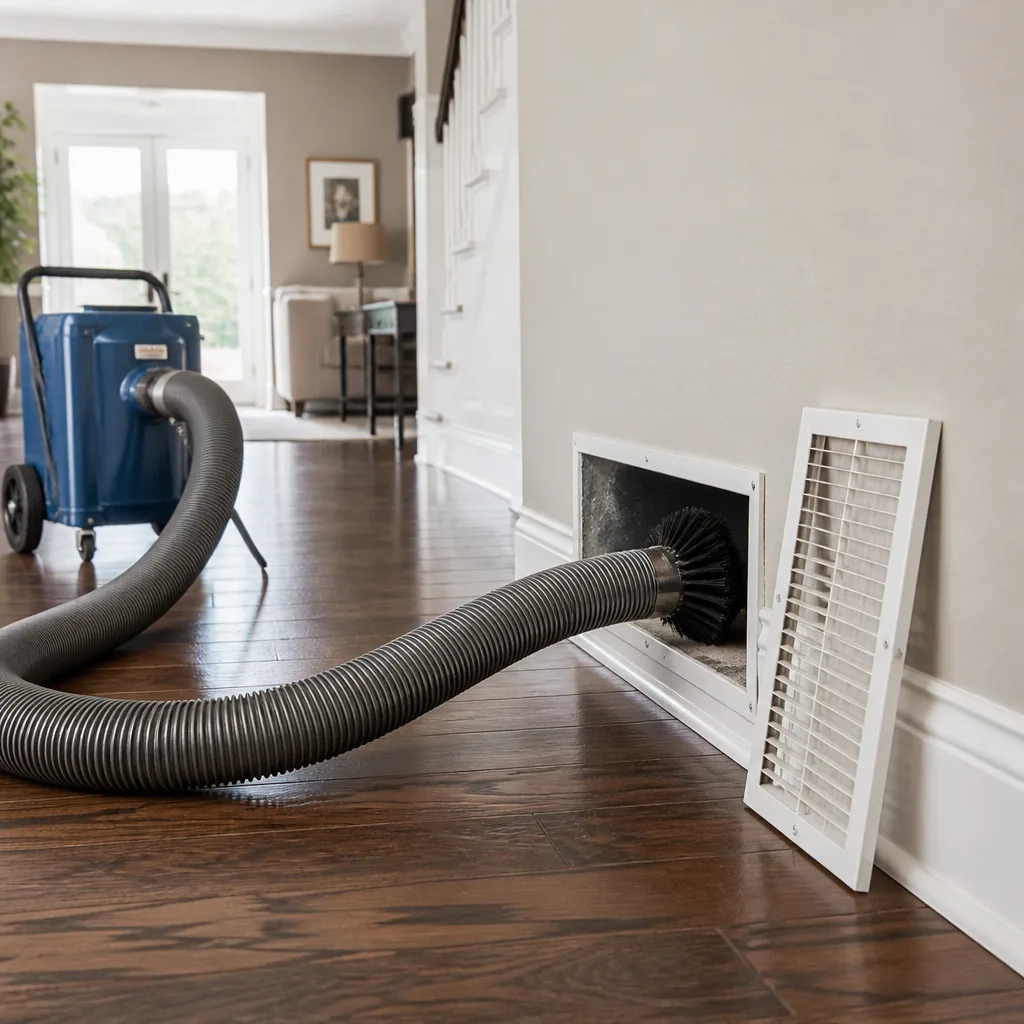 Whole-home duct cleaning
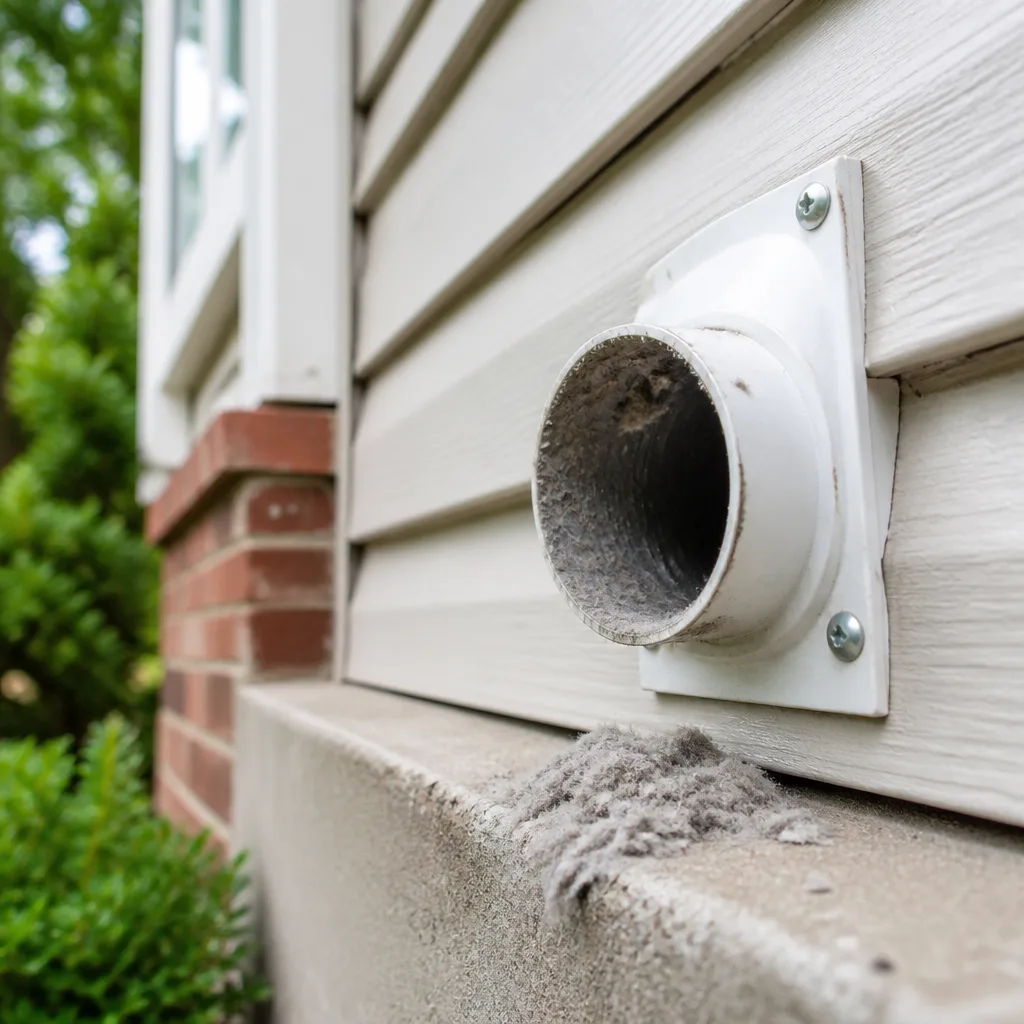 Dryer vent cleaning
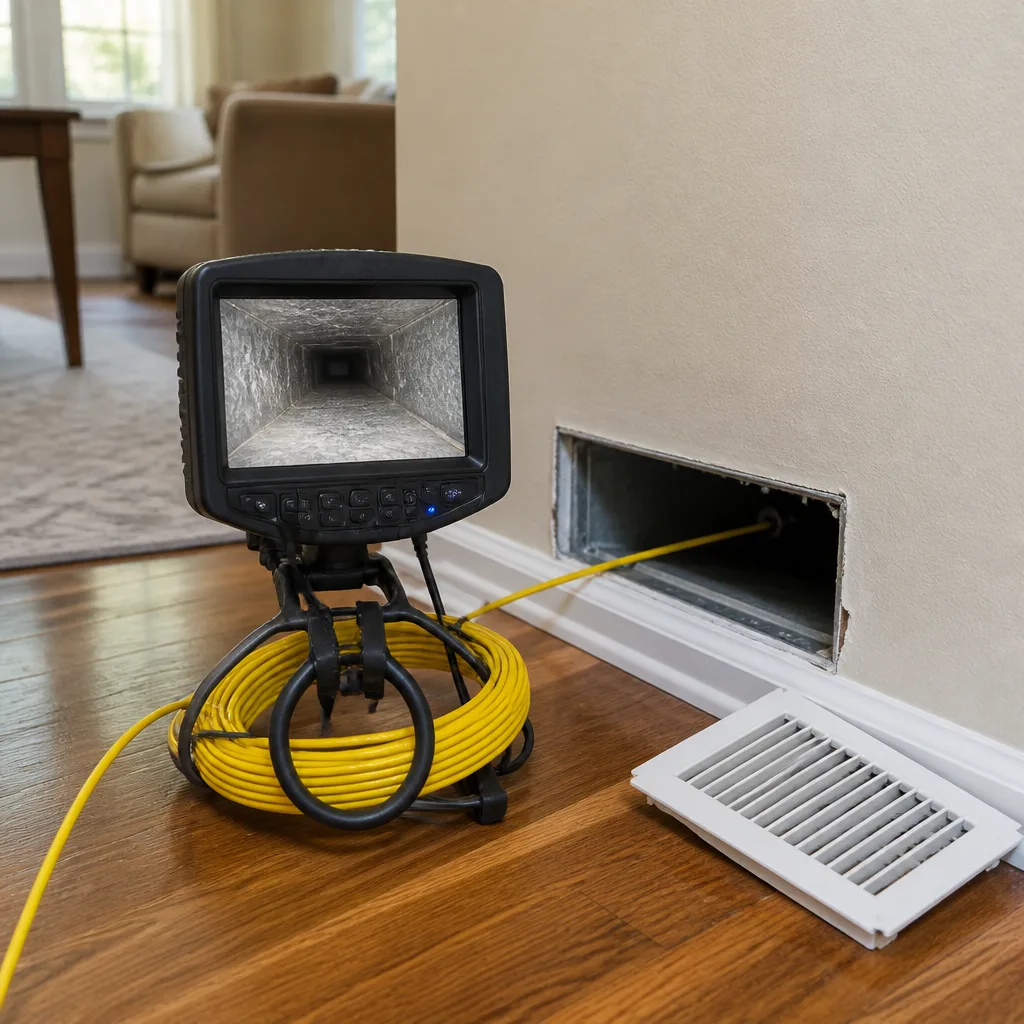 Camera inspection
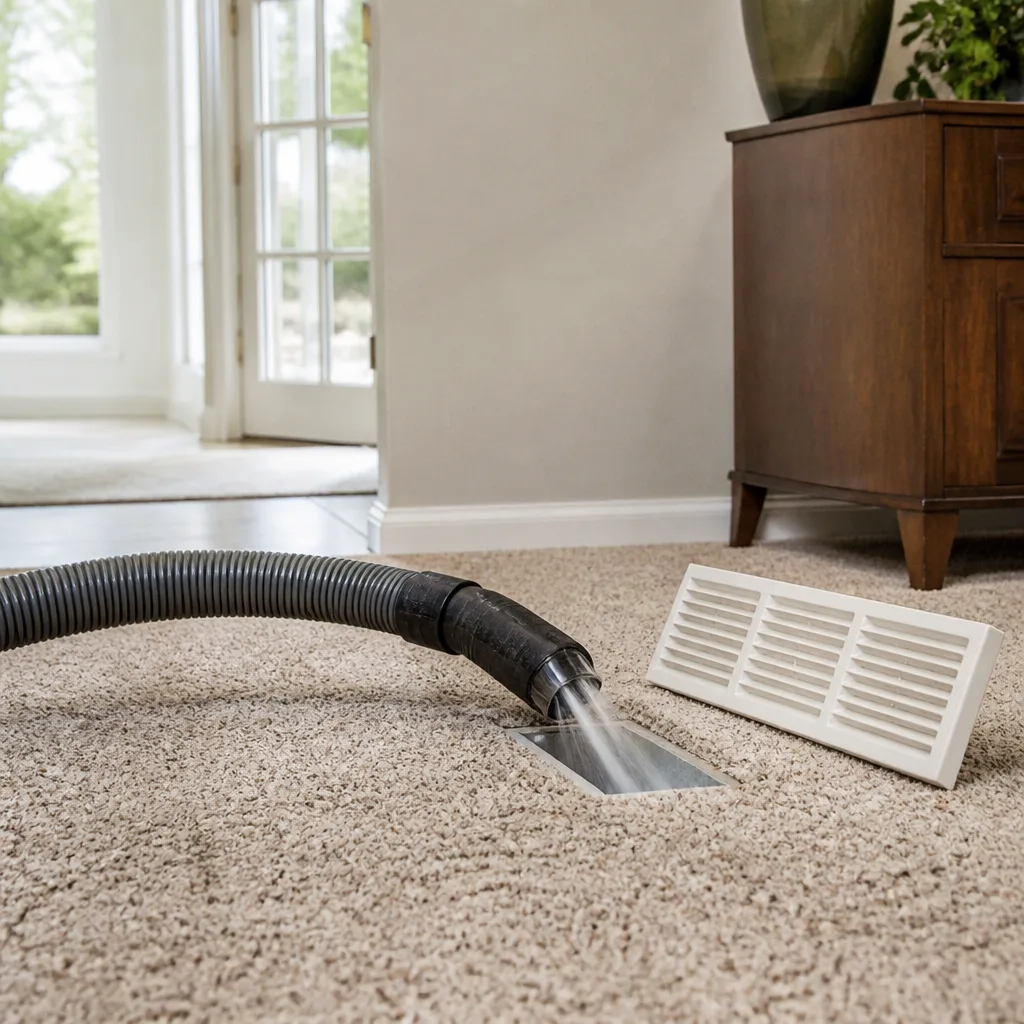 Sanitizing & deodorizing
Whole-system duct and dryer vent check with before-and-after photos - you see exactly what came out of your vents
That "$99 whole-house special" is a bait ad - the real number appears once they are in your hallway, or the "clean" is a shop-vac at the register. We photograph the inside of your ducts before and after instead.
Air Duct Cleaning Warning Signs: A Concord Homeowner’s Reference Guide
Most duct problems give you fair warning. The trouble is that the warnings look like ordinary HVAC quirks: a faint smell on the first cold morning, a bedroom that never heats evenly, a filter that seems to load up fast. None of it feels urgent, so it gets filed away. But each of those signals points to something specific inside the system – accumulation, a blockage, or active contamination – and the earlier you read it correctly, the cheaper the fix. In this Concord guide, we’ll walk through the five sensory indicators, show you how to inspect your own registers in five minutes, and draw the line between “needs cleaning” and “needs repair.”
Quick Answer
The main warning signs of a duct system that needs attention are a musty or stale smell when the system starts up, weak or uneven airflow between rooms, whistling or rattling sounds, visible dust or discoloration around supply and return registers, and filters that load up noticeably faster than they used to. In Concord, a sixth sign shows up after wildfire smoke events: reddish-brown particulate collecting on register faces when the system has been running without adequate filtration.
Styles & brands we work with
- Whole-home duct cleaning
- Dryer vent cleaning
- Camera inspection
- Sanitizing & deodorizing
Table of Contents
- The Five Sensory Indicators and What Each One Means
- The 5-Minute Register Inspection You Can Do Yourself
- Normal Filter Dust vs. Accelerated Loading
- The Concord Smoke Event Sign Most Homeowners Miss
- Cleaning Won’t Fix Everything: Signs of a Real Repair Problem
- Dust Is Normal: What Isn’t
- How Ducts and Your HVAC Equipment Work Together
- What Concord Housing Stock Teaches You About Duct Age
The Five Sensory Indicators and What Each One Means
Duct problems communicate through smell, airflow, sound, visible debris, and filter behavior. Each channel tells you something different about condition, and reading them together is how a trained technician decides whether a system needs cleaning, repair, or a closer inspection with a camera. Here’s what each one is actually telling you.
1. Smell
A musty or earthy odor that appears when the heat or air first turns on is the most specific sign of biological growth on internal duct surfaces. It’s different from the brief hot-dust smell a system gives off after months of disuse. The musty smell returns every cycle rather than fading, and it tends to be strongest in the rooms furthest from the air handler. In our experience, smell is the single strongest indicator that cleaning is due rather than merely helpful.
2. Airflow
Rooms that were once comfortable and now aren’t – or rooms that never were – point to restriction somewhere in the run. Weak supply airflow at one register while others feel strong usually means a blocked or disconnected branch. Weak airflow everywhere suggests a dirty blower, a clogged filter, or a problem at the trunk line.
3. Sound
Whistling at a register means air is being forced through a gap or restriction. Rattling or popping in the walls when the system cycles can be loose duct joints, an undersized return, or flex duct that has collapsed or come loose from its fitting. Sound is often the sign that turns a cleaning call into a repair call.
4. Visible Debris
Dust streaks radiating from a register, dark staining around the grille edge, or a visible mat of debris inside the register boot after you remove the grille all indicate accumulation on the surfaces the air passes over. Uniform light dusting on a grille face is normal. Patterns are not.
5. Filter Loading Rate
A filter that used to last three months and now looks gray in three weeks is telling you that more particulate is entering the return than before. That can mean a breach in the return duct, a filtration system that isn’t sealing properly, or contamination upstream. Filter behavior is the easiest sign to track and the most useful over time.
The 5-Minute Register Inspection You Can Do Yourself
Before you call anyone, document what’s visible inside your own vents. A flashlight and a phone camera give you enough evidence to describe the problem accurately and to compare what a contractor tells you against what you’ve already seen. This isn’t a substitute for professional inspection, but it’s a reasonable first step.
- Turn the system off at the thermostat so debris isn’t drawn toward you.
- Remove a supply register grille – usually two screws or a friction clip. Set the screws somewhere you’ll find them again.
- Shine the flashlight into the boot and photograph straight down the duct run toward the air handler.
- Repeat at one return grille, which is usually the largest grille in a central hallway or near the thermostat.
- Note whether surfaces inside are uniformly light gray, or whether you see dark patches, matted debris, visible moisture, or debris caught on the damper edges.
- Look for a gap where the flex duct meets the boot or the trunk. A visible separation is a repair finding, not a cleaning one.
- Put the grille back and photograph the grille face itself for a before/after reference.
Save those photos. If you’re comparing estimates, they let you ask specific questions instead of general ones. They also serve as the “before” for the “after” comparison that any serious contractor should offer you. Benchmark works from before-and-after documentation of your own ducts because the work should be inspectable, not taken on faith.
Normal Filter Dust vs. Accelerated Loading
Every filter loads up. What matters is the rate and the pattern. A standard filter in a healthy system darkens gradually and evenly across the whole surface over its rated interval. A filter that loads unevenly, darkens much faster than before, or collects debris on one side of the frame only is telling you something changed in the system.
- Even, gradual graying: normal. Change per manufacturer guidance.
- Fast loading across the whole filter: increased particulate upstream – often a return-side breach, a filtration system that isn’t sealing, or a duct interior holding a heavy contaminant load.
- Loading on one side or in one corner: airflow bypass around the filter frame, or a return that’s pulling from a compromised location.
- Matted, fibrous debris on the filter face: fibrous material entering the return, often from degradation of the duct interior itself if the system has flex duct.
- Filter loading fast only after a smoke event: a filtration capacity problem, which is a different conversation.
If you’re running a Honeywell or Aprilaire filtration system or media cabinet, loading rate is even more diagnostic because these systems are designed to be measured, not guessed. We work with both types regularly and can look at filter behavior across the system rather than in isolation.
The Concord Smoke Event Sign Most Homeowners Miss
Concord sits in a bowl that holds air on still days, and wildfire smoke that drifts into the East Bay tends to linger. When a system runs during a smoke event without adequate filtration, fine particulate enters through the return and settles on the interior surfaces of the ductwork. Over the following weeks, that particulate starts appearing as a reddish-brown or rust-colored dusting on the faces of supply registers and along the edges of ceiling grilles.
Homeowners often mistake this for rust or for house dust. It’s neither. It’s smoke particulate and the fine ash that comes with it, and it collects specifically in the places where the air is pushed out of the system. If you notice reddish-brown particulate on registers and it appeared after a stretch of poor air quality, that’s a signal the system has been running without the filtration in place to protect it.
What to do about it depends on the system. A return-side filter change is step one. If the pattern appears across multiple registers and returns were pulling apart at the same time, cleaning is usually the right next step. If you run a whole-home filtration system, the filter media itself may need to be upgraded for the conditions Concord sees during a bad smoke season. Here in Concord, a properly sealed filtration setup is the guard rail between outdoor air quality and your duct interior.
Cleaning Won’t Fix Everything: Signs of a Real Repair Problem
Not every warning sign means the ducts need cleaning. Some mean the ducts themselves are compromised, and cleaning those without repair would be a mistake. Those jobs are what our air duct repair service exists to handle.
Look for these specific findings:
- Collapsed flex duct: a run that has sagged and pinched closed. No amount of cleaning restores airflow through a flattened duct.
- Disconnected trunk or branch: a joint that has separated, usually found by seeing a gap in the visible run or by a room with almost no airflow while the rest of the house is comfortable.
- Active moisture at the air handler: condensation, standing water, or staining in the area where the duct connects to the air handler. Moisture plus ductwork is a different category of problem, and cleaning a wet system is not appropriate.
- Torn or missing duct insulation: exposed duct liners in unconditioned spaces cause condensation and airborne fiber issues.
- Improperly sealed boots: gaps at the ceiling penetration that let attic or crawl air into the supply. That’s a repair plus air-sealing job.
This is where equipment depth matters. A blower-and-vacuum rig can pull debris out. It cannot diagnose a collapsed run. Our technicians use Rotobrush contact-cleaning systems and Nikro HEPA-extraction equipment, and we inspect before we quote – meaning the answer to “does this need cleaning, repair, or both” comes from looking at the system, not assuming.
Dust Is Normal: What Isn’t
Some dust is part of owning a house with a forced-air system. Understanding what’s within normal range keeps you from chasing a problem that isn’t there – and, more importantly, keeps you alert when something crosses the line.
Normal
- Light even gray dusting on register faces between filter changes
- A slight dust smell on first startup after months of not running the system
- One or two rooms that run slightly warmer than others because of sun exposure or distance from the air handler
- A filter that darkens evenly over its rated interval
Not Normal
- A smell that returns every cycle or intensifies with running
- A register face that darkens evenly and quickly across multiple rooms
- Whistling or rattling that starts with the system and stops when it ends
- Visible debris matting inside a register boot
- Reddish-brown or dark staining specifically near register edges
- Airflow that changes noticeably without a filter change
The difference between the two lists is consistency and pattern. Normal signs are steady-state; warning signs change, recur, or escalate. If you’re seeing anything on the second list across a Concord home, that’s the point at which a professional assessment earns its keep.
How Ducts and Your HVAC Equipment Work Together
Duct cleaning in isolation misunderstands the system. Ducts don’t exist apart from the equipment that moves air through them, and the equipment doesn’t work well without clean ducts. When you’re managing allergies or trying to keep an older system running efficiently, this coordination matters more than any single service.
Airflow is the shared currency. A dirty return on any system stresses the blower. A filter that’s undersized or bypassing loads faster than it should. And filtration systems only protect the duct interior if the duct interior is sealed and clean to begin with. This is why a client running an Aprilaire media cabinet or a Honeywell filtration system on top of contaminated ductwork sees the filter loading problem return every few months – the filter is doing its job; the system isn’t giving it a fair start.
Our team also works with Abatement Technologies equipment, which puts remediation-level air-quality capability into the toolkit. That’s the practical difference between “we cleaned your ducts” and “we cleaned your ducts and documented the before and after so you can see what improved.” The Benchmark name comes from that standard – inspectable, measured, accountable to airflow benchmarks rather than soft language about “fresh air.”
What Concord Housing Stock Teaches You About Duct Age
Duct condition tracks the age and construction style of the house it lives in, and Concord’s range of housing stock shows every version of that. Homes built in the postwar decades often have original galvanized trunk lines with flex branches added over the years. Later construction relies heavily on flex duct, which is efficient but less forgiving of heat, movement, and settling. Each era has its own failure pattern.
The specific warning signs of an older system tend to be sound and airflow: rattles at the trunk, uneven temperatures, dust patterns that concentrate near the oldest parts of the house. On flex-duct-heavy construction, the warning signs tend to be filter loading and visible fiber strands – because flex duct that has been subjected to years of hot attic air starts to break down internally.
Concord’s mild winters limit one thing – you won’t see duct issues driven by deep cold cycles, and freeze-thaw damage isn’t a factor here. What you will see is dry-season dust and smoke-season particulate in the same system, often within the same year, which is why filtration and cleaning need to be planned together rather than treated as separate events. The Concord climate is easy on the ductwork but hard on the filter stack.
Common Mistakes to Avoid
- Assuming the musty smell is “dust burning off.” A real dust-burn smell fades within minutes on the first heat cycle of the season. A recurring musty smell is biological growth on duct surfaces, and it deserves a proper look.
- Cleaning ducts without checking the return-side seal. If the return is pulling from an attic or crawl space, cleaning is a temporary fix. Seal first, clean second.
- Buying a quote with no inspection. Any price agreed over the phone without looking at the system is a guess. We inspect before we quote because the honest answer often differs from the phone answer.
- Cleaning a system with active moisture. Wet ductwork needs moisture corrected before cleaning is meaningful. Cleaning alone will not fix an active leak.
- Ignoring the smoke-event register pattern in Concord. If you see reddish-brown particulate after a wildfire smoke stretch, that’s not house dust. It’s an indication your filtration wasn’t up to the outdoor air conditions.
- Skipping the dryer vent while you’re at it. Your dryer vent is a fire risk, not an afterthought. It’s a completely separate system with its own lint-accumulation risk, and it should be inspected as its own routine service.
- Treating a collapsed duct as a cleaning problem. A flattened flex run can be cleaned forever and never deliver airflow. Repair is the fix.
See the difference
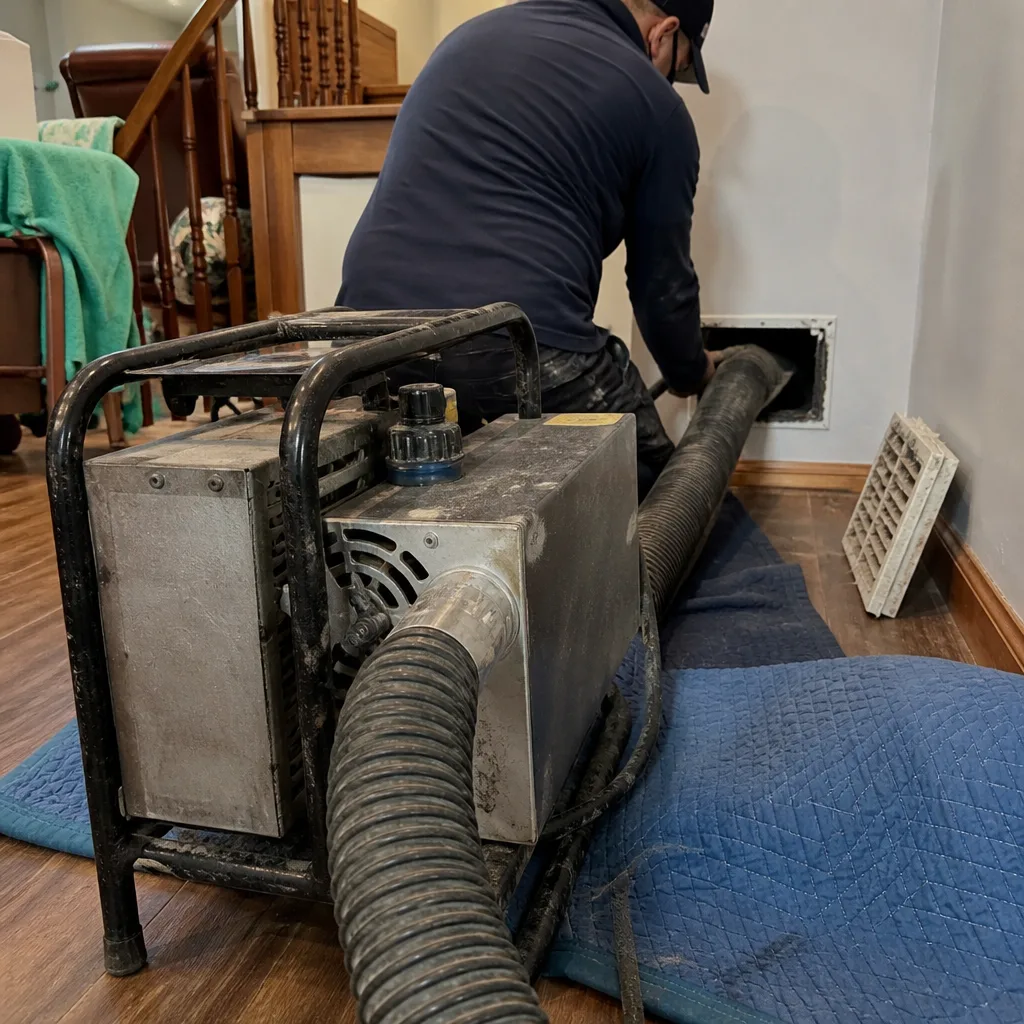 Before
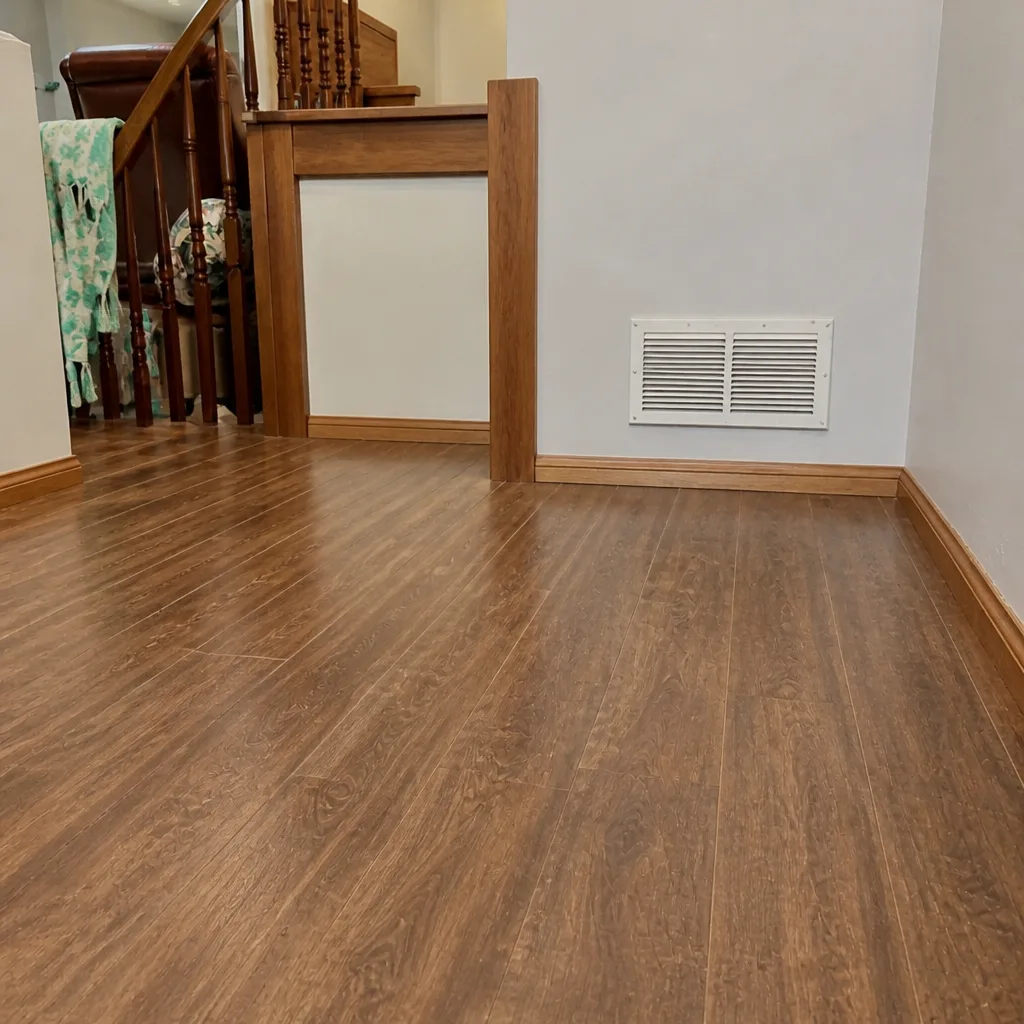 After
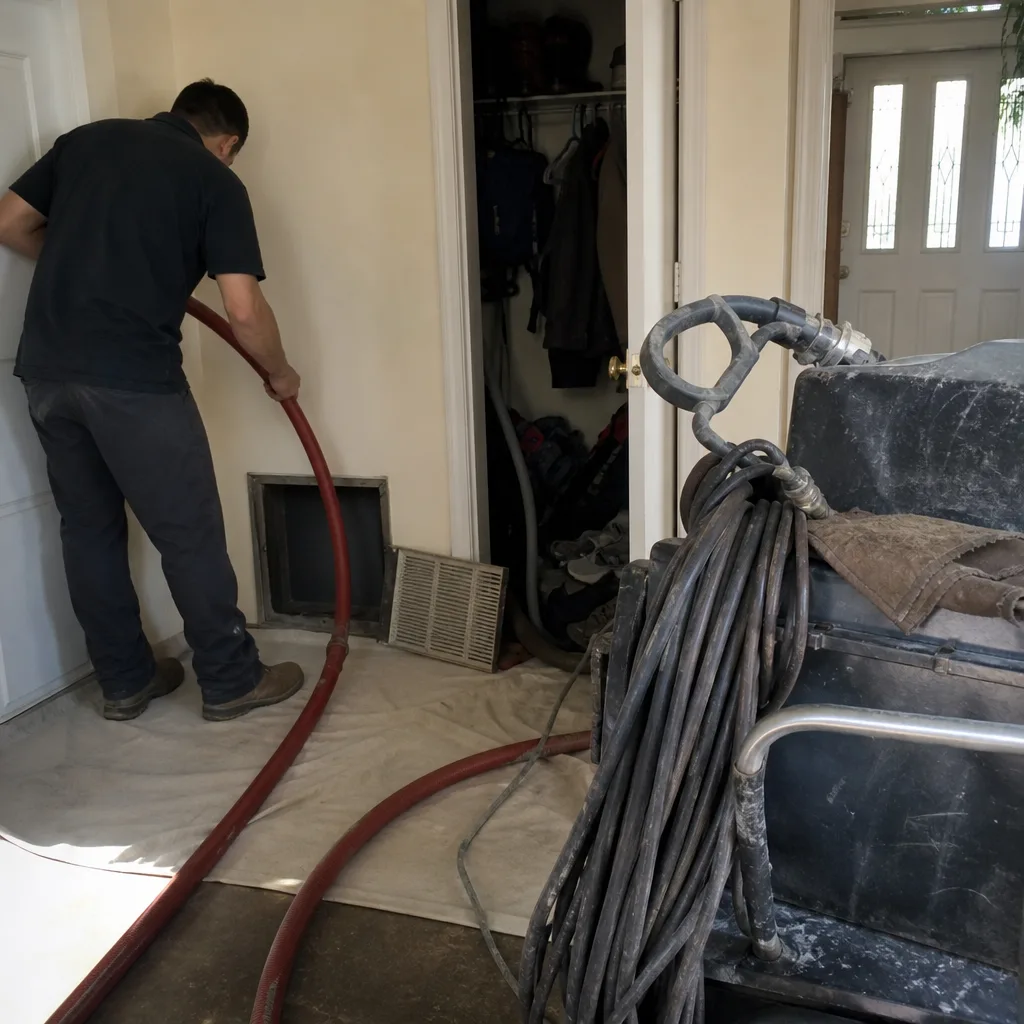 Before
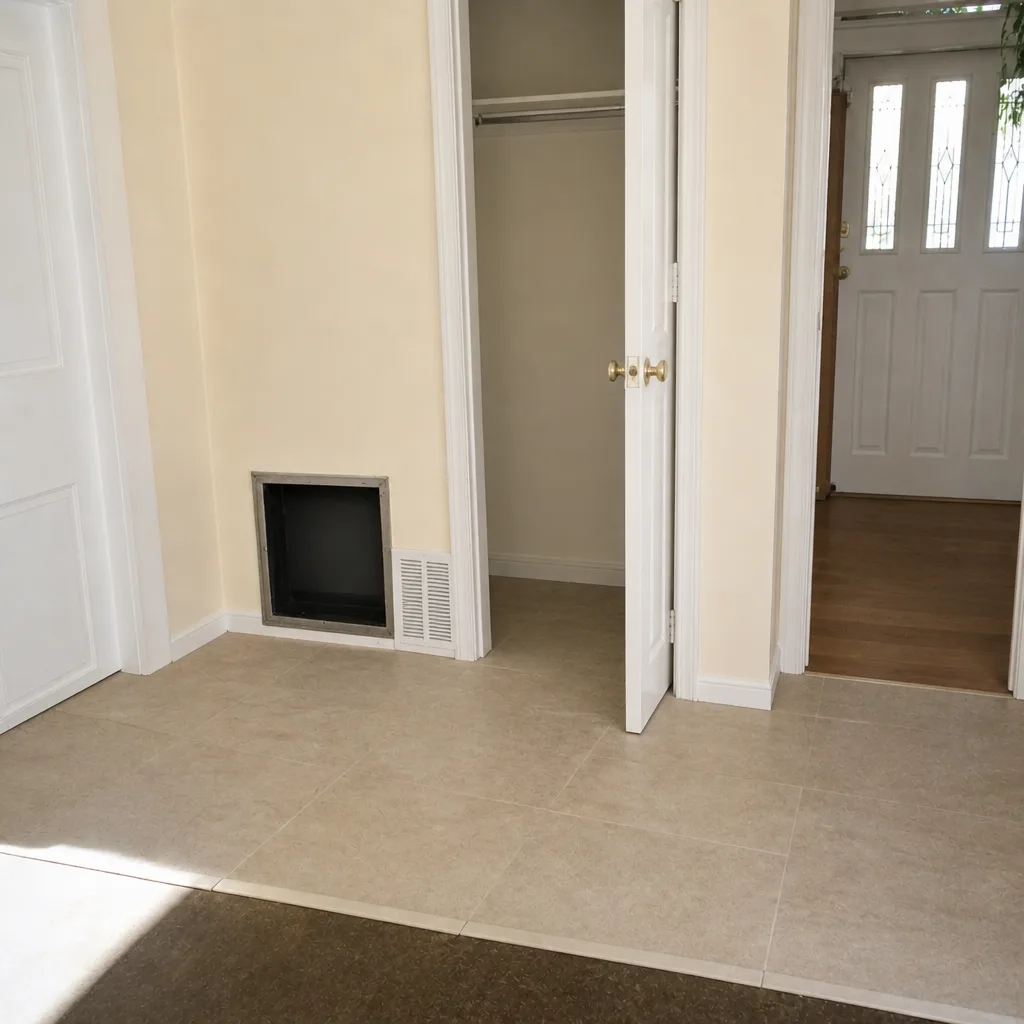 After
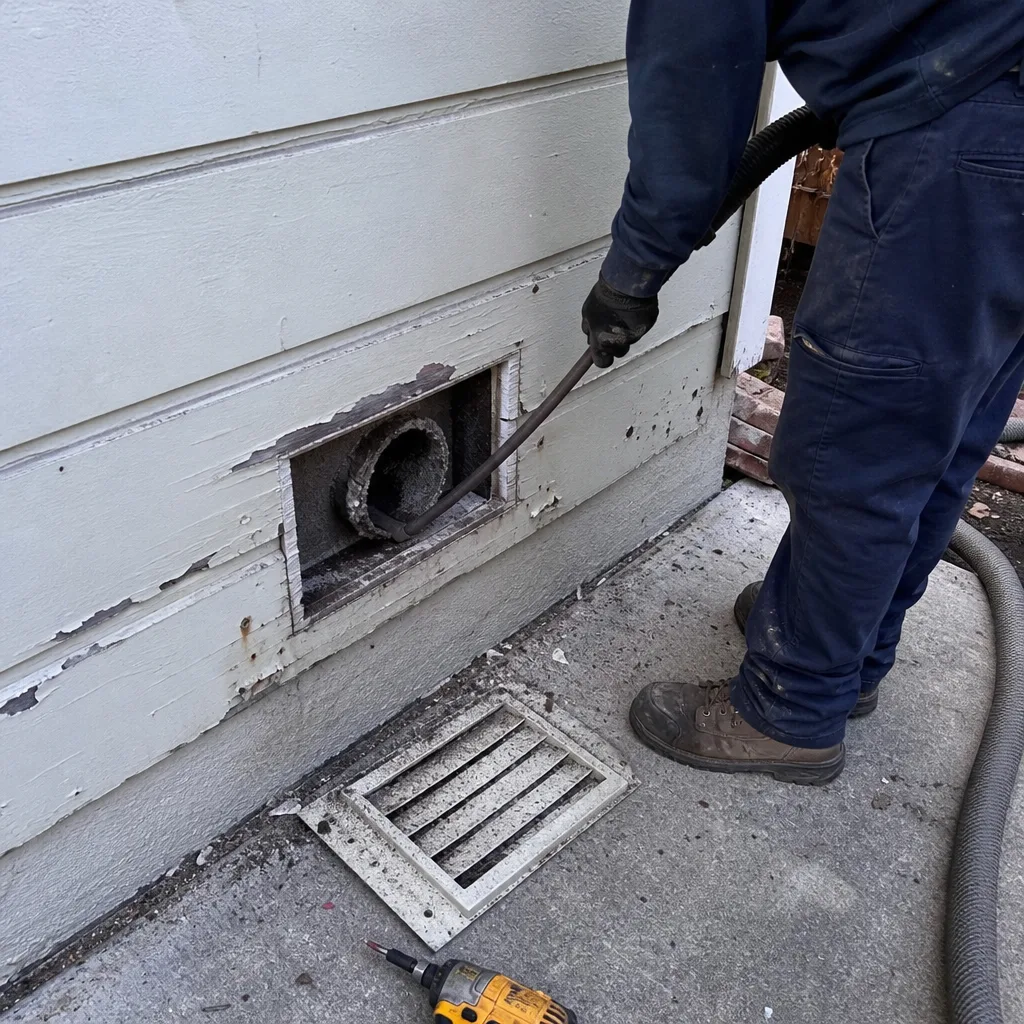 Before
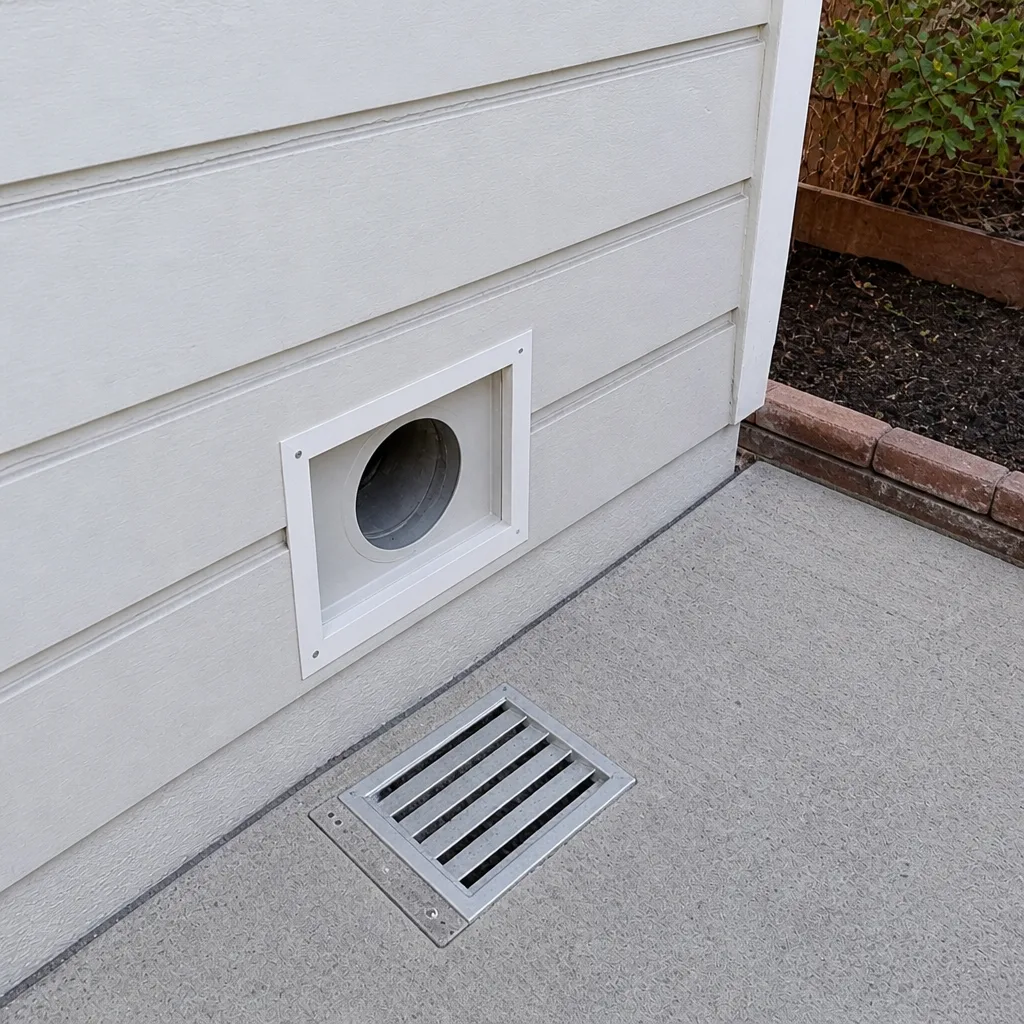 After
When to Call a Professional
If you’ve noted a recurring smell, uneven airflow, visible debris inside a register boot, reddish-brown particulate on register faces after a smoke event, or an unexpected uptick in filter loading rate, that’s the point to bring in professional eyes. If you’ve found a separated duct, visible moisture at the air handler, or a visibly collapsed run, don’t run the system until someone has looked at it – because running it makes the situation worse. Same if you’re managing allergies in the household and the warning signs keep returning despite regular filter changes. You’re not looking for someone to “clean ducts” as a generic service; you want a proper inspection and a written picture of the system.
For local service details and how our work is structured in this area, see Concord. Benchmark Air Duct Cleaning offers free estimates in Concord – call (855) 970-7954. We answer 24/7. Fast dispatch from 7am to 7pm, Sunday through Friday.
Frequently Asked Questions
Most Concord homes benefit from an assessment every few years, but the honest answer is that condition matters more than the calendar. A house that has gone through wildfire smoke seasons, has compromised return-side sealing, or is running a filtration system that loads up quickly may need attention sooner. A house with well-sealed return air and steady filter performance may be fine longer. Call (855) 970-7954 for an exact quote based on what your system actually shows.
Pricing depends on the size and configuration of your system, how many trunks and branches it has, and whether cleaning is paired with repair. The price is set per job by the written estimate, after the inspection, not over the phone. That’s deliberately different from how discount outfits price – because a phone price agreed before someone has looked at your ducts is a guess, and guess-work is what lets a small quote turn into a much larger invoice on-site. Call (855) 970-7954 for an exact quote – estimates are free.
Cheap quotes usually reflect two things: low-powered equipment and a scope that doesn’t include inspection or repair. A shop-vac-and-blower setup can’t contact-clean interior duct surfaces and can’t document what changed. What makes a quote more expensive on a serious job is the equipment, the inspection, the repair capability, and the before-and-after photos of your own ducts. Ask any contractor what equipment they use and whether they document the work. That’s the honest comparison.
Ask for before-and-after photos of your own system’s interior – not stock photos of a generic duct. Every professional cleaning job should produce that documentation. If a contractor can’t show you what you had and what you have, that’s a real signal. Benchmark works to that standard by design, because the benchmark is inspectable.
Not always. If your filtration system was sealed and running with proper filter media during the smoke, the duct interior can be reasonably protected. The sign that cleaning is warranted is visible: reddish-brown particulate collecting on registers, a filter that loaded fast during or after the event, or a smell that appeared afterward and hasn’t gone away. Call (855) 970-7954 for an exact quote if you’re not sure what you’re seeing.
It can, particularly when filtration is addressed at the same time. Duct interiors holding years of accumulated particulate are a reservoir that filtration alone can’t reset – the filter is fighting upstream. Cleaning and upgrading filtration together (Honeywell and Aprilaire systems are common choices for this) has a more consistent effect on indoor air than either step on its own. Call (855) 970-7954 for an exact quote if you’re managing allergies in the home.
The Bottom Line
Duct problems give warning. Smell, airflow, sound, visible debris, and filter loading are the five channels to watch, and each points to something specific about the condition of the system inside. In Concord, a sixth sign appears after smoke events: reddish-brown particulate on register faces when filtration wasn’t up to the occasion. Cleaning is the right answer for accumulation, contact contamination, and smoke particulate. Cleaning is the wrong answer for collapsed runs, disconnected trunks, and active moisture, which are repair findings. Whatever you’re seeing, the first step is a proper inspection – not a phone quote. Benchmark Air Duct Cleaning offers free estimates in Concord: (855) 970-7954. We answer 24/7. Fast dispatch from 7am to 7pm, Sunday through Friday.
If you’re ready to go deeper on the individual services and what each one covers, our Benchmark Air Duct Cleaning, air duct cleaning, and dryer vent cleaning guides walk through the process step by step.
Written by the team at Benchmark Air Duct Cleaning.